 Up to 35% Off!


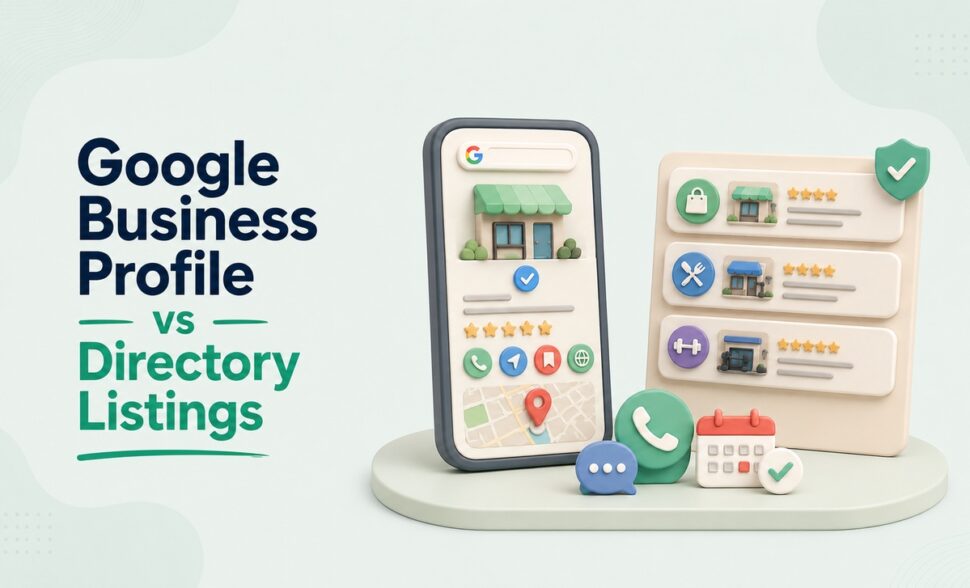
Table of Contents
- 1 What Is Google Business Profile?
- 2 What Are Directory Listings?
- 3 How They Drive Leads Differently
- 4 Where Google Business Profile Wins
- 5 Where Directory Listings Win
- 6 The Data: What Businesses Are Actually Experiencing
- 7 Common Mistakes to Avoid
- 8 Which One Should You Prioritize?
- 9 For Directory Builders: What This Gap Means
- 10 Frequently Asked Questions
- 10.1 Is Google Business Profile better than directory listings?
- 10.2 Do directory listings help with SEO?
- 10.3 How many directories should a business be listed on?
- 10.4 Can directory listings help with AI search (ChatGPT, Gemini)?
- 10.5 What's the difference between a citation and a backlink in directory listings?
- 11 To sum up
Google Business Profile vs Directory Listings: Which Drives More Leads?
-

- Digital Marketing
- 10 mins read
Every local business owner hits the same question at some point: Where should I actually list my business to get leads?
Google Business Profile is free, easy to set up, and puts you on Google Maps. Directory listings take more effort, span multiple platforms, and the ROI isn’t always obvious at first glance.
So which one actually drives more leads?
The short answer: it depends on what stage you’re at and what kind of business you run. The longer answer — which is what this article covers — is that GBP and directory listings work on different parts of the buyer journey, and the businesses getting the most leads in 2026 are using both.
This article breaks down exactly what each one does well, where each falls short, and which one you should prioritize first.
TL;DR;
Google Business Profile dominates Map Pack visibility for local searches. Directory listings build trust signals, provide SEO backlinks, and reach buyers on platforms Google doesn’t control — including AI tools like ChatGPT and Perplexity. Most businesses need both. The priority depends on your business type and how competitive your local market is.
What Is Google Business Profile?
Google Business Profile (formerly Google My Business) is a free tool that controls how your business appears in Google Search and Google Maps.
When someone searches “plumber near me” or “coffee shop in [city],” the results that appear in the map section — the three businesses listed before the organic results — are called the Map Pack or Local Pack. GBP is what gets you there.
A complete GBP listing includes your business name, address, phone number, hours, photos, reviews, posts, and service descriptions. When someone clicks on your business in Google Maps, everything they see comes from your GBP profile.
GBP is the starting point for local visibility. If you haven’t claimed yours, that’s the first thing to fix — a competitor may have already suggested edits to your unclaimed listing, or Google may have generated an inaccurate auto-profile from scraped data.
What Are Directory Listings?
Directory listings are entries on platforms outside of Google that organize businesses by category, location, or specialty.
General directories — Yelp, Yellow Pages, Foursquare, Apple Maps, Bing Places — list businesses across every industry. Niche directories — Healthgrades for doctors, Houzz for contractors, Avvo for lawyers, G2 for software companies — list businesses within a specific sector.
When a potential customer is searching on Yelp, or asking ChatGPT for contractor recommendations, or looking for a specialist on an industry directory, your GBP listing does nothing. Your directory listings are what surface you there.
Directory listings also serve a second purpose beyond direct discovery: they create citations and backlinks. A citation is a consistent mention of your business name, address, and phone number (NAP) across the web. A backlink is a link from that directory to your website. Both are signals Google uses to evaluate your local authority — which indirectly affects your GBP ranking, too.
How They Drive Leads Differently
| Factor | Google Business Profile | Directory Listings |
|---|---|---|
| Primary source of traffic | Google Search & Maps | Platform traffic + Google (via citations/backlinks) |
| Cost | Free | Free to paid |
| Review source | Google Reviews | Platform-specific reviews |
| Backlink value | None | Yes |
| AI search citation | Low | High |
| Niche targeting | Limited | Strong |
| Trust signal type | Self-managed profile | Third-party validation |
| Setup time | 30–60 minutes | Varies by number of platforms |
The key difference is this: GBP controls your presence on Google. Directory listings control your presence everywhere else — and “everywhere else” is growing.
Where Google Business Profile Wins
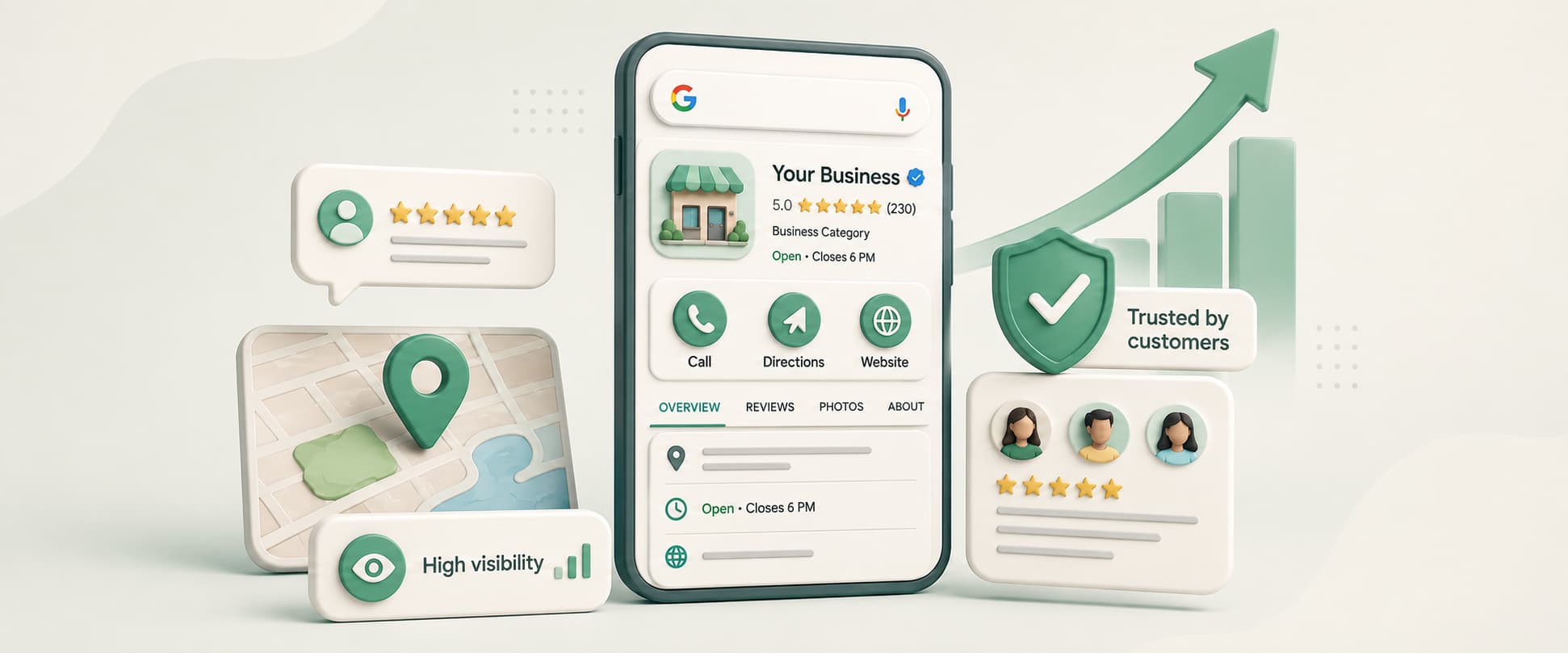
Map Pack dominance The Map Pack appears above all organic results for local queries. If someone searches “dentist near me” on mobile, the first three results they see are Map Pack listings. Ranking in the Map Pack for your primary keyword is the single highest-leverage local SEO action most businesses can take.
Direct action clicks from mobile GBP listings include a direct call button, directions button, and website link. A mobile user can go from search to phone call in two taps without ever visiting your website. For service businesses (plumbers, locksmiths, restaurants), this directness translates to high conversion rates from map searches.
Google Reviews as social proof 81% of consumers read Google reviews when evaluating local businesses (BrightLocal). Google Reviews carry more weight than any other review platform in purchase decisions — largely because they’re the most visible and hardest to fake. A strong GBP review profile is one of the most reliable lead drivers a local business can build.
Speed to results A complete, optimized GBP profile can start ranking in the Map Pack within weeks. Organic SEO often takes months. For businesses that need leads quickly, GBP is the fastest local channel.
Integration with Google Ads If you run Google local ads or Local Services Ads, GBP powers the ad listings directly. GBP reviews, photos, and profile completeness affect ad quality scores and prominence.
Where Directory Listings Win
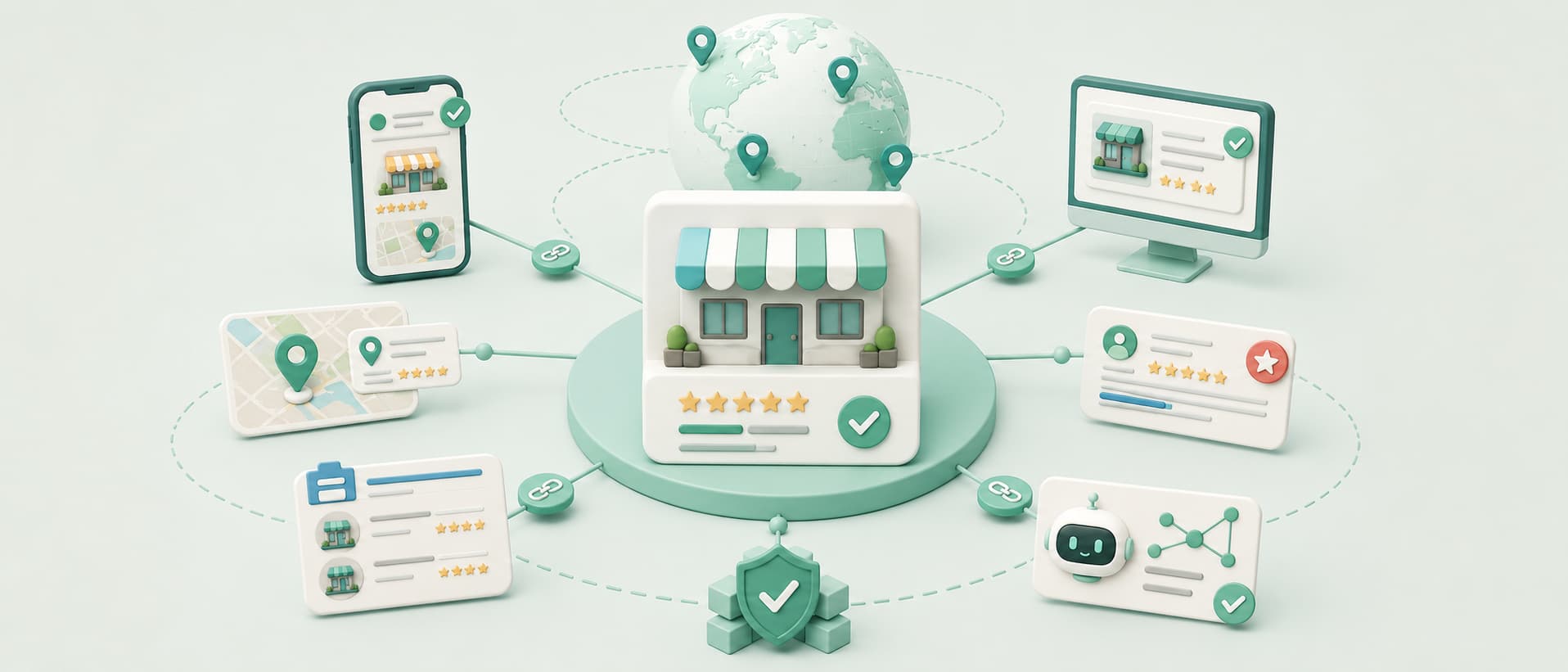
Reach beyond Google Google controls roughly 88% of search engine traffic — but local business discovery happens in more places than search engines. Yelp drives 224 million reviews and 178 million unique visitors monthly. Apple Maps serves every iPhone user. Bing Places matters for users on Windows devices, which is roughly one-third of desktop users globally.
More significantly: 45% of consumers now use ChatGPT or other AI tools for local business recommendations (BrightLocal). When someone asks ChatGPT “who’s the best HVAC contractor in Denver,” the answer doesn’t come from GBP. It comes from structured directory data that AI systems have indexed. A business with no directory presence is invisible to this growing slice of buyer behavior.
Backlinks that improve domain authority GBP creates zero backlinks to your website. A listing on a high-authority directory like Yelp (DR 94), Angi (DR 73), or Healthgrades (DR 76) creates a backlink that contributes to your overall domain authority — which in turn improves your rankings in organic Google results, including the Map Pack.
Third-party trust signals GBP is a self-managed profile. A business can upload its own photos, write its own description, and post its own updates. Buyers know this. Directory listings — particularly on platforms with review moderation — carry more perceived neutrality. A 4.8-star rating on Yelp reads as more independently validated than a 4.8-star rating on a company’s own website.
Businesses with complete directory listings are 2.7x more likely to be considered reputable by local consumers (Jasmine Directory Local Consumer Review Survey 2026).
Niche authority Industry-specific directories carry weight that general directories don’t. A doctor listed on Healthgrades signals legitimacy in a way a Yelp listing doesn’t. A software tool on G2 with verified reviews is taken more seriously by B2B buyers than a Google Business listing. If you operate in a sector with a dominant niche directory, not being on it is a credibility gap.
NAP consistency as a ranking factor When your Name, Address, and Phone number are consistent across 50+ directory listings, Google has 50 corroborating data points that your business information is accurate. This consistency is a direct ranking factor for the Map Pack. Businesses with high citation counts and NAP consistency outrank businesses with identical GBP optimization but inconsistent or missing directory listings.
The Data: What Businesses Are Actually Experiencing
The consumer behavior data supports using both channels, not choosing between them.
The average consumer checks 3 to 5 different sources before making a local purchase decision (BrightLocal Consumer Search Behavior Research). GBP may be one source. But if a competitor appears on Yelp, Angi, and a niche directory and you appear only on GBP, you’re losing the trust-building phase of the buyer journey.
76% of people who search locally visit a business within 24 hours (BrightLocal). The businesses they visit are the ones they found credible across multiple touchpoints — not just the business that showed up first on Google Maps.
28% of local searches result in a purchase within one week. This is a high-intent audience. The question is not whether they’ll buy — it’s whether they’ll buy from you or a competitor who had a more complete local presence.
Common Mistakes to Avoid
Claiming GBP and stopping there GBP gets you visibility on Google. It does nothing for the 12% of consumers using other search engines, the buyers researching on Yelp, or the growing percentage asking AI tools for recommendations. Using GBP only is leaving real leads on the table.
Listing on every directory you can find A listing on a low-authority, spam-heavy directory is worse than no listing. It creates a NAP mention that may not match your other listings, it signals low curation standards to Google, and it does nothing for real buyers. Quality matters more than volume. Ten targeted, high-authority directories outperform fifty low-quality ones.
NAP inconsistency If your GBP says “123 Main St,” your Yelp listing says “123 Main Street,” and your Yellow Pages listing has an old phone number, these discrepancies create conflicting data that weakens your local authority signal. Audit your existing listings before adding new ones.
Ignoring niche directories in your industry General directories build citation volume. Niche directories build category authority. If you’re a lawyer not listed on Avvo and Justia, a doctor not on Healthgrades and Zocdoc, or a contractor not on Houzz and Angi, you’re absent from exactly the platforms where buyers in your sector make their final decisions.
Treating all reviews as equivalent Google Reviews are the most influential single review source for purchase decisions. But reviews on industry-specific directories carry more weight for specific buyer types. A B2B buyer evaluating software cares more about G2 reviews than Google reviews. A patient choosing a specialist weighs Healthgrades ratings heavily. Know which review platforms matter to your specific buyer.
Which One Should You Prioritize?

Start with Google Business Profile if:
- You have a physical location or serve a defined local area
- Your customers use “near me” or city-name searches
- You’re in a high-volume consumer niche (restaurants, salons, gyms, retail)
- You haven’t claimed and verified your GBP yet
Prioritize directory listings if:
- Your GBP is already claimed, verified, and fully optimized
- You serve a national or remote audience
- You’re in a trust-heavy category (healthcare, legal, financial services, home improvement)
- You want your business to appear in AI-generated recommendations
- You’re in a sector with a dominant niche directory where buyers actively search
The realistic baseline for 2026: A fully optimized GBP profile combined with listings on 5 to 8 targeted, high-authority directories is the minimum viable local presence for any business competing for leads online. Below that threshold, you are consistently losing to competitors who have done this work.
The progression looks like this:
- Claim and complete GBP — photos, hours, description, services, first 10 Google reviews
- List on 4–5 general directories — Yelp, Apple Maps, Bing Places, Facebook Business, Yellow Pages
- List on 2–3 niche directories — specific to your industry and highest buyer intent
- Audit NAP consistency — ensure name, address, and phone match exactly across all listings
- Monitor and respond to reviews — on GBP and key directories, regularly
For Directory Builders: What This Gap Means
The data above illustrates something important for anyone thinking about building a directory website.
The demand for curated, niche directories is growing precisely because GBP alone isn’t enough. Buyers use directories for validation, not just initial discovery. A business that shows up in Google Maps but has no third-party presence reads as less trustworthy than a competitor with five consistent directory listings and 40 verified reviews on a niche platform.
As AI tools like ChatGPT and Perplexity become a more common starting point for business discovery, structured directory data becomes more valuable — not less. These AI systems pull from trusted, structured sources. A well-built niche directory with complete, verified listings is exactly the kind of source they cite.
The opportunity is to build the directory that serves the gap GBP leaves open in your niche: structured information, verified credentials, community-sourced reviews, and category-specific filtering that Google’s generic business profile system can’t replicate.
If you’re a business owner reading this, the insight is clear: list on quality directories. If you’re a directory builder reading this, the insight is equally clear: the audience that needs directories is larger than it’s ever been, and the directories winning in 2026 are the ones built around trust and data quality, not listing volume.
Build your niche directory with Directorist →
Frequently Asked Questions
Is Google Business Profile better than directory listings?
Neither is better — they operate on different platforms and serve different parts of the buyer journey. GBP is essential for Google Maps and local search visibility. Directory listings build trust, provide backlinks, and reach buyers outside Google, including AI tools. Most businesses need both.
Do directory listings help with SEO?
Yes, in two ways. First, high-authority directory listings create backlinks that improve your domain authority, which indirectly improves your rankings in Google Search and the Map Pack. Second, consistent NAP mentions across directories are a direct ranking factor for local SEO.
How many directories should a business be listed on?
Focus on quality over quantity. 8 to 15 high-authority, relevant directories is a strong local presence. Include 4–5 general directories (Yelp, Apple Maps, Bing Places, Facebook, Yellow Pages) and 3–5 niche directories relevant to your industry. Avoid mass-submission to low-quality directories.
Can directory listings help with AI search (ChatGPT, Gemini)?
Yes. AI tools like ChatGPT, Perplexity, and Gemini pull business information from structured directory data when answering local recommendation queries. Businesses with complete, consistent listings on trusted directories are significantly more likely to be cited in AI-generated recommendations than businesses that rely on GBP alone.
What’s the difference between a citation and a backlink in directory listings?
A citation is any mention of your business name, address, and phone number (NAP) — even if there’s no clickable link. Citations build local authority signals that Google uses for Map Pack ranking. A backlink is a clickable link from the directory to your website, which contributes to your domain authority. High-quality directories provide both.
To sum up
Google Business Profile is the foundation. Directory listings are the multiplier.
GBP gets you visible on the world’s largest search engine, which is where most local searches begin. But most buyers don’t make decisions from a single source — they check reviews, compare options, and look for third-party validation before committing. Directory listings are what builds that layer of credibility.
In 2026, with AI tools handling a growing share of business discovery, the businesses getting cited and recommended are the ones with complete, consistent, structured data across multiple trusted platforms. GBP alone is not enough to compete for that visibility.
The businesses showing up everywhere — in the Map Pack, on Yelp, on niche directories, and inside AI recommendations — are not doing more work than everyone else. They’re doing the right work once, in the right places, and letting that consistent presence compound over time.
Start with GBP. Add targeted directory listings. Keep the information consistent. Then let the leads come from every direction.
Related reading:

Rezaul Karim
Rezaul Karim is a Digital Marketer and Content Strategist at wpWax, the team behind Directorist — trusted by 20,000+ directory websites worldwide. With 6+ years of experience in SEO-driven content and WordPress plugin marketing, he provides data-backed insights on building high-authority directory businesses. From optimizing search visibility to streamlining directory user experiences, Rezaul focuses on practical solutions that drive impressions and conversions. When he isn't auditing site performance or exploring the latest AI-integrated marketing tools, he is an avid reader and advocate for sustainable digital growth.

Leave a Reply
You must be logged in to post a comment.