



Table of Contents
- 1 Listing Quality
- 2 Review Quality
- 3 Blog Content Quality
- 4 Why Directory Website Content Quality Is a Ranking Decision
- 5 FAQ
- 5.1 How do I stop spam listings on my directory?
- 5.2 Does AI-generated content affect my directory's Google ranking?
- 5.3 How do I handle fake or suspicious reviews?
- 5.4 What fields should I require on listing submissions?
- 5.5 How often should a directory blog publish new posts?
- 5.6 How do I attract more listing owners to maintain submission quality?
How to Keep Content Quality High on Your Directory Website
-

- Tips & Tricks
- 10 mins read
The directory website content quality problem is different from most other websites. You are not just managing what your team publishes – you are managing what hundreds or thousands of other people submit. Listings come from business owners with varying levels of care. Reviews come from users with varying levels of honesty. Blog posts come from writers with varying levels of skill. Every piece of content that goes live under your domain reflects on your platform.
Google’s content quality signals have also become stricter. Sites with a high proportion of thin, repetitive, or AI-generated content face ranking penalties regardless of how well-optimised individual pages are. Directories are particularly exposed because they naturally accumulate large volumes of short, user-submitted text. If your listings say nothing useful, your reviews are generic, and your blog is full of filler, the whole site pays for it.
This guide covers quality standards across the three content types that matter most for a directory site: the listings themselves, the reviews users leave, and the blog content you publish or commission.
Listing Quality
What a useful listing actually looks like
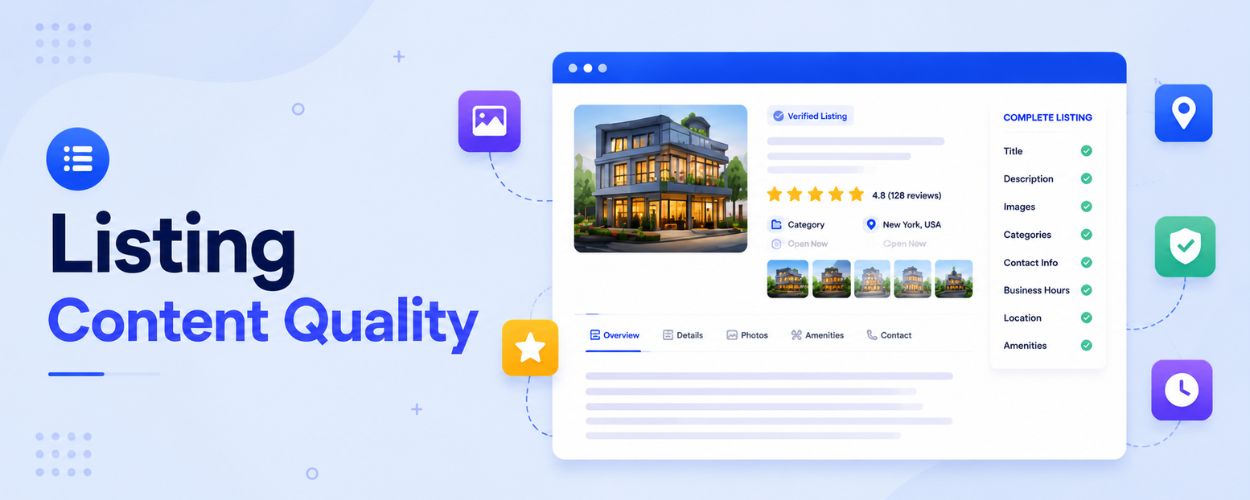
A listing that helps a real visitor has five things: an accurate business name, a description that explains what the business does (not just what it is called), a working contact method, a real location or service area, and at least one photo. That is the floor. Everything else – additional fields, social links, opening hours, pricing ranges – builds on top of it.
The problem is that most listing owners fill in the minimum required fields and skip the rest. If your required fields are minimal, your listings will reflect that.
Set meaningful required fields
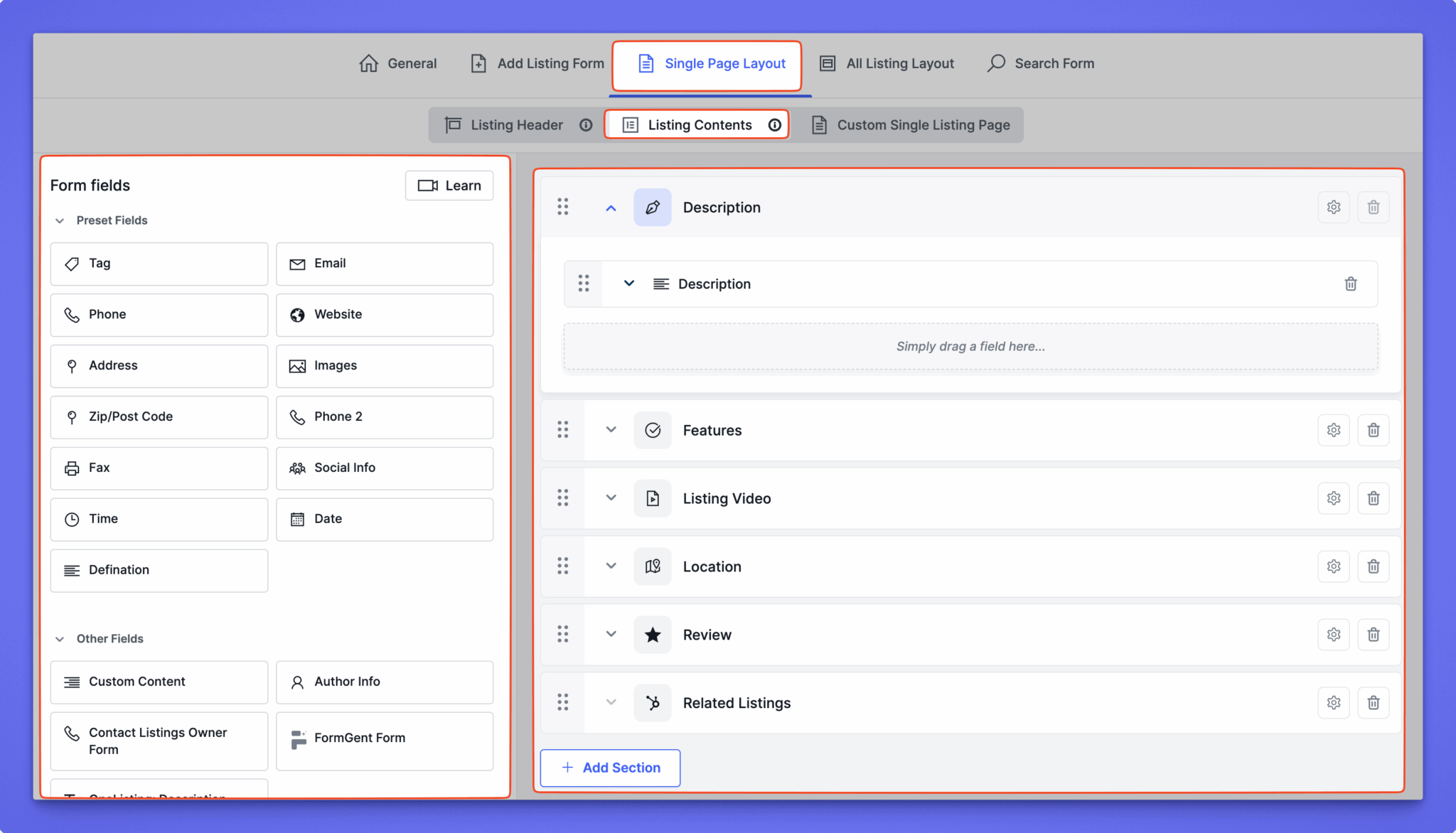
Directorist lets you define which fields must be completed before a listing can be submitted. Use this deliberately. At a minimum, require a description with a character floor – 150 characters is a reasonable starting point, enough to say something specific rather than just naming the business and its location. Require at least one contact method and one photo.
The character minimum matters more than it appears. Without it, you get one-line descriptions that give visitors nothing to act on and give Google nothing worth indexing. A description that reads “We provide quality plumbing services in Austin” is technically a description. It tells no one anything useful, and it looks identical to a hundred other listings in the same category.
Moderate before listings go live
Turn on submission moderation so new listings require approval before they appear publicly. Directorist’s admin panel handles this in the listing settings. This adds a step, but it prevents low-quality or spammy submissions from reaching your visitors and search engines before you have reviewed them.
When reviewing a submission, look for: descriptions that are clearly copied from the business’s own website (not necessarily a problem, but worth checking for keyword stuffing), contact details that don’t match the business name, listings with no real description beyond a single line, and submissions where the category is mismatched to the actual business type. These cover most of what you will encounter.
Deal with duplicates before they accumulate
Duplicate listings split your search visibility across multiple pages and confuse visitors looking for a specific business. If your directory operates in categories where the same businesses tend to be submitted repeatedly, show similar existing listings during the submission flow so owners can claim an existing record rather than creating a new one. For bulk data imports, always run a de-duplication check against your existing database before the import goes live.
Review Quality

Reviews give your directory two things: trust signals for visitors making decisions, and structured data that search engines use to generate rich results. Star ratings appearing directly in Google search results improve click-through rates in a way that most other optimisations cannot replicate. But fake or AI-generated reviews undermine both benefits faster than no reviews at all.
Where fake reviews come from
Fake reviews on directory sites typically come from three sources. Business owners submit five-star reviews for their own listings. Competitors submit negative reviews to suppress rivals. And increasingly, AI-generated bulk submissions arrive where someone posts dozens of plausible-sounding reviews across multiple listings in a short period.
The AI-generated pattern is the hardest to catch at the individual review level because each review can look legitimate in isolation. What reveals it is volume and uniformity: the same sentence structure across multiple reviews, the same level of generic detail, no variation in how different reviewers describe their experience, and multiple submissions from accounts with no prior activity. If a listing receives five reviews within two days from brand-new accounts, that is worth investigating.
Publish a review policy and link to it
A published review policy gives you a documented basis for removing submissions without having to justify each decision individually. It also discourages borderline submissions – most people who might submit a fake review will not bother if there is a visible policy in place.
Your policy should state: reviews must come from genuine customers, one review per person per listing, no reviews for businesses the reviewer owns or manages, and reviews that violate the policy will be removed without notice. Link to it directly from the review submission form, not just from a footer page.
Moderate flagged reviews on a schedule
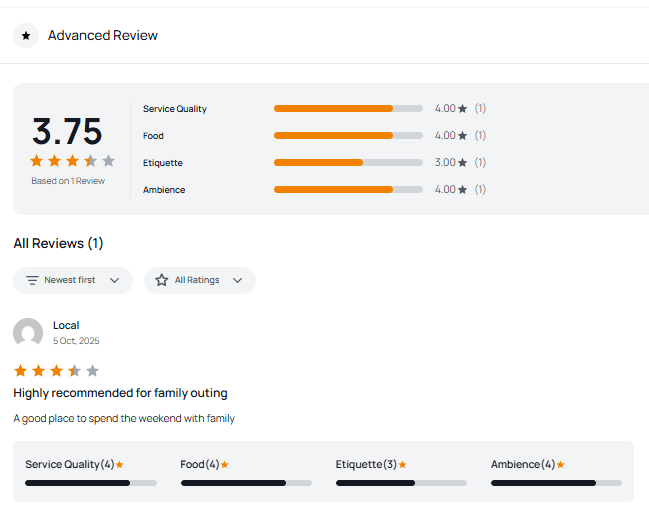
Give visitors a way to flag reviews as suspicious, and review the queue on a regular schedule – weekly is manageable for most directories. The Directorist Advanced Review extension supports structured review criteria such as rating service quality, value, and environment separately.
This makes patterns easier to spot: if flagged reviews consistently give maximum stars across all criteria with no specific detail in the comment field, that is a pattern worth acting on. Generic praise with no specifics is one of the clearest signals of a fabricated review.
Blog Content Quality

Your directory blog has a different quality challenge from your listings and reviews. The risk here is not spam from outside – it is gradual decline in your own standards, especially if you are outsourcing posts, using AI writing tools to speed up production, or accepting guest contributions from people with something to promote rather than something useful to say.
Set an editorial checklist and use it every time
Before any post goes live, someone on your team should verify four things: the post answers a genuine question your audience has, every factual claim is sourced or grounded in real experience, the writing is clear on the first read without requiring interpretation, and the content is directly relevant to your directory’s niche and not just loosely connected to it.
This sounds straightforward, but most small teams skip this step when publishing pressure builds up. A written checklist takes two minutes to complete and catches most quality problems before they reach your readers.
Using AI tools without the risks
AI writing tools can help with drafts, outlines, and research. The risk is not using them – it is publishing their output without meaningful editing. Unreviewed AI content tends to be accurate at the surface level but hollow underneath: grammatically correct, informationally thin, and interchangeable with content on any competitor’s blog. It reads like it was written about any directory site in any category, because it was.
Before publishing any post that was drafted with AI assistance or written by an external writer, run it through an AI detector. This identifies sections that read as generated rather than written – patterns that readers and search engines increasingly recognise. If the detector flags sections of the draft, rewrite those parts with specific examples, real observations, or concrete advice drawn from your actual experience running a directory. That specificity is what separates content worth publishing from content that should stay in draft.
Remove any links to off-topic or off-brand external sites before publishing. External links pass authority from your pages to the sites they point to – every link you publish is an editorial endorsement. Make sure the destinations earn it.
Standards for guest posts and contributed content
If you accept guest posts from listing owners, industry contacts, or niche writers, set a written submission standard before you start receiving them. It should cover: a minimum word count (800 words is a reasonable floor for a publishable post), required relevance to your directory’s niche with no generic how-to content that could appear on any blog, no promotional links to external sites, and a clear expectation that the writer will revise if asked.
Run every guest submission through your editorial checklist. Contributors vary widely in quality, and the ones who submit most readily are often the ones with something to promote. A request for revisions is a normal part of working with outside writers — if someone is not willing to revise, that tells you something about how the relationship will go.
Publish at a cadence you can actually maintain
A consistent publishing schedule is more valuable than an inconsistent volume. Publishing six posts in a week and then going quiet for two months creates a pattern that signals low editorial investment to both readers and search engines. Decide what cadence your team can sustain without compromising on quality – one solid post per month is more useful than four thin ones — and hold to it. Content quality compounds over time when it is consistent.
Why Directory Website Content Quality Is a Ranking Decision
Google’s quality signals for directory-style sites are more demanding than they were a few years ago. The Helpful Content system penalises sites where a significant portion of content exists primarily to attract search traffic rather than to help real people. For a directory, that means listings with no useful information, reviews that read as fabricated, and blog posts that do not answer a real question for a real reader.
The E-E-A-T framework – Experience, Expertise, Authoritativeness, Trustworthiness — applies to directories even though it is most often discussed in the context of health and finance content. A directory that has been operating for several years, has verified listings with real descriptions, has genuine user reviews, and has a blog written by people with direct knowledge of the niche scores better on these signals than one that has prioritised volume over quality. This affects rankings site-wide, not just on individual pages.
The practical takeaway: the standards you set for your listing quality, reviews quality, and blog content quality are also decisions about how Google evaluates your platform. Treating them as housekeeping underestimates their impact.
For a fuller look at how to build SEO visibility for your directory site, the Directorist SEO guide covers the technical and content angles together.
FAQ
How do I stop spam listings on my directory?
Require admin approval before listings go live and set a character minimum for descriptions. Spam submissions almost always fail one or both checks — they either contain no real description or they use keyword-stuffed text that does not pass a human review. A CAPTCHA on the submission form also reduces automated submissions considerably, especially for new directories that are not yet established enough to attract real listings organically.
Does AI-generated content affect my directory’s Google ranking?
AI-generated content is not penalised by Google on its own. What causes ranking issues is publishing thin, unreviewed AI content at scale — content that exists to fill space rather than to answer a real question. If you use AI tools to help write content and then edit the output carefully, add specific examples, and verify every claim, the resulting post is no different from one written entirely by a person. The quality standard is what matters, not the tool used to produce the first draft.
How do I handle fake or suspicious reviews?
Publish a clear review policy, give visitors a way to flag suspicious submissions, and review the flagged queue on a regular schedule. For reviews that are clearly fabricated — submitted by multiple new accounts in a short period, with generic content and no specific detail — remove them and record the reason in your moderation notes. For ambiguous cases, contact the reviewer and ask them to confirm their experience with a specific detail. Most fake reviewers will not respond.
What fields should I require on listing submissions?
At minimum: a description with a character floor of 150 or more, one contact method (phone, email, or website), a location or service area, and at least one photo. These are the fields that make a listing useful to a real visitor. Optional fields such as social links, opening hours, and additional categories can be added later by the listing owner through their dashboard and should not block the initial submission.
How often should a directory blog publish new posts?
There is no universal answer. What matters is maintaining a cadence you can sustain without cutting corners on quality. One well-researched post per month outperforms four rushed ones over the course of a year, both in terms of reader trust and in how consistently Google crawls and evaluates the blog. Start with what your team can manage, track whether the content is attracting relevant visitors over three to six months, and adjust from there.
How do I attract more listing owners to maintain submission quality?
Setting clear quality standards actually helps here. Listing owners who care about their online presence prefer directories that look professional and curated over ones that accept anything. Publishing your listing standards and showing examples of well-completed listings gives potential listing owners confidence that their submission will appear alongside other quality content. A guide on how to attract businesses to your directory covers the acquisition side in more detail.

S. M. Navid Anjum
Digital Marketing enthusiast who loves to write technical reviews and trendy contents. Currently working with WordPress Plugin Marketing and growth. Open to collaboration and co-marketing opportunities with any SaaS and plugins.


Leave a Reply
You must be logged in to post a comment.