 Up to 35% Off!


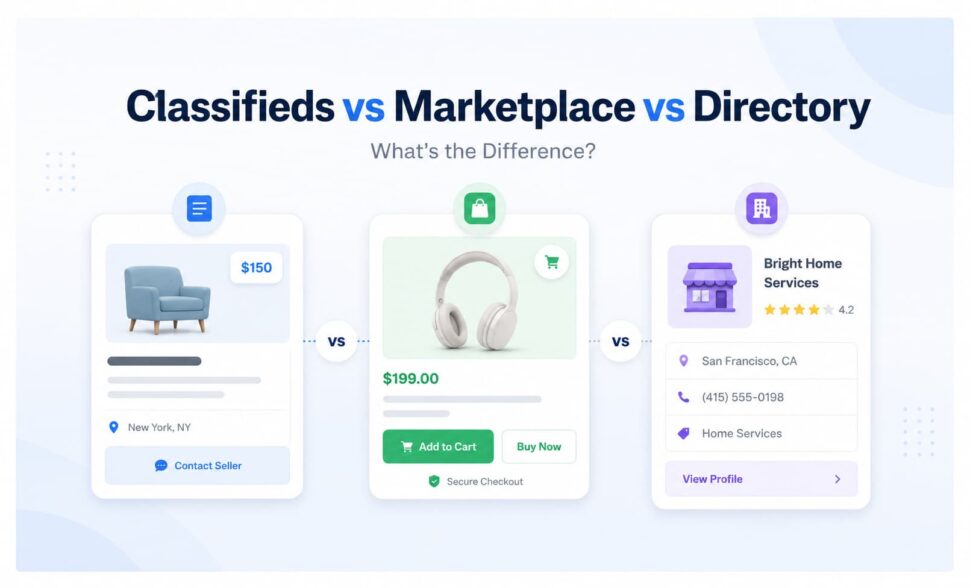
Table of Contents
- 1 [QUICK ANSWER BOX]
- 2 What Are Classifieds?
- 3 What Are Marketplaces?
- 4 What Are Business Directories?
- 5 What Is the Difference Between a Marketplace and a Directory?
- 6 Classifieds vs Marketplaces: Key Differences
- 7 Which Should You Build?
- 8 How to Build a Classifieds or Directory Site on WordPress
- 9 Frequently Asked Questions
- 9.1 What are classifieds?
- 9.2 What is the classifieds meaning in online commerce?
- 9.3 What is the difference between a marketplace and a directory?
- 9.4 What is a classified marketplace?
- 9.5 Should I build a classifieds site or a marketplace?
- 9.6 What is the best WordPress plugin to build a classified ads or directory site?
- 9.7 What to Do Next
Classifieds vs Marketplace vs Directory: What’s the Difference?
-

- News & Update
- 10 mins read
Understanding the difference between a classified site, a marketplace, and a business directory matters whether you’re choosing where to post an ad, evaluating a platform as a buyer, or deciding what to build. The three models look similar from the outside but operate on fundamentally different logic.
This article explains each model clearly, compares them side by side, and helps you decide which one to build if you’re starting a directory or listing site.
[QUICK ANSWER BOX]
What are classifieds? Classifieds are short, structured ads posted by individuals or businesses to buy, sell, rent, or offer services — organized by category and location. Unlike marketplaces, classifieds don’t process payments; the transaction happens directly between buyer and seller. Unlike directories, classified listings are temporary — they expire when the item sells or the time period ends. Examples: Craigslist, OLX, Facebook Marketplace.
What Are Classifieds?

Classifieds are a form of advertising that is typically used to promote or sell goods, services, or job opportunities. These are traditionally found in newspapers, magazines, and other print publications, although they have also transitioned to online platforms.
In reality, classifieds are organized into specific categories such as real estate, automotive, employment, personal services, and more. Each ad typically consists of a short text description along with contact information for the person or business offering the product or service.
Generally, these ads are usually brief and concise, as they aim to provide essential information while being cost-effective for advertisers. They are often charged based on the number of lines or words used in the ad.
In the past, classifieds were primarily found in printed publications, and individuals would contact the publication to place an ad. Nowadays, with the rise of the internet, online classified platforms have become more popular. Websites and apps dedicated to classified ads allow users to create and publish ads easily, reach a larger audience, and often offer additional features like including images or videos in the ads.
What Are Marketplaces?

Marketplaces are online platforms where buyers and sellers can interact and engage in commercial transactions. They provide a virtual space for individuals or businesses to sell products or services to a large customer base. In a marketplace, sellers list their offerings, set prices, and provide descriptions, while buyers browse through the available options, compare prices, and make purchases.
Again, marketplaces can be specialized, focusing on specific niches or industries, or they can be general, catering to a wide range of products and services. They bring together multiple sellers, creating a centralized location for consumers to discover and access various offerings.
Well-known examples of marketplaces include Amazon, eBay, Alibaba, Etsy, Airbnb, Uber, and Upwork. They have transformed various industries by providing efficient and convenient ways for buyers and sellers to connect, expanding choices for consumers, and enabling entrepreneurs and small businesses to reach a broader market.
What Are Business Directories?
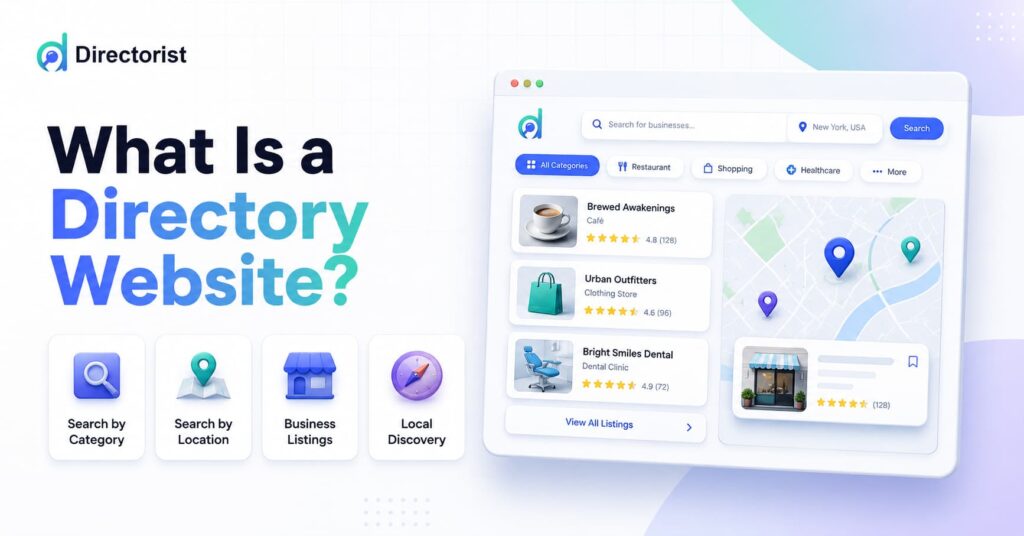
A business directory is a structured database of businesses, service providers, or listings that users browse to find what they need. Unlike classifieds, listings are permanent — a restaurant or contractor stays in the directory as long as they’re active, not just until something sells. Unlike marketplaces, directories don’t process payments or take commissions.
The directory’s value comes from completeness and trust — the more accurate and comprehensive the listings, the more useful it becomes. Revenue models typically include subscription plans for businesses to be listed, featured placement upgrades, lead generation fees, or advertising.
Examples: Yelp, Google Business Profile, TripAdvisor, Clutch, Yellow Pages.
What Is the Difference Between a Marketplace and a Directory?
This is the most common point of confusion. Both marketplaces and directories list businesses or products — but they operate very differently.
| Classifieds | Marketplace | Directory | |
|---|---|---|---|
| Examples | Craigslist, OLX, Facebook Marketplace | Amazon, eBay, Etsy, Airbnb | Yelp, Google My Business, TripAdvisor |
| Who posts | Any individual or business | Verified sellers | Business owners |
| Listing duration | Temporary (expires when sold) | Permanent (while active) | Permanent |
| Payment handled by | Buyer and seller directly | Platform | Not applicable |
| Platform revenue | Listing fees, featured ads | Commission per transaction | Subscription, featured listing |
| Transaction role | Connection only | Full intermediary | Connection only |
| Trust mechanism | User self-verification | Platform ratings + escrow | Reviews + verification badges |
| Best for | Buying/selling individual items | Shopping from multiple sellers | Finding businesses or services |
The key distinction: A marketplace takes ownership of the transaction — it processes your payment and is responsible if something goes wrong. A directory and a classified platform are both connection tools — they put you in contact with the business or seller, but the actual transaction happens outside the platform.
The secondary distinction between classifieds and directories: Classifieds are ephemeral (a listing for a used sofa disappears once it sells). Directory listings are permanent (a restaurant listing stays for years). This difference in listing lifespan shapes everything: the submission model, the moderation approach, the search experience, and the revenue model.
Classifieds vs Marketplaces: Key Differences
Structure and How Listings Are Organized
Classifieds organize ads by category and location — you browse “Electronics > Laptops > London” and scan individual posts. Each post is created by a single person with a short description and contact details.
Marketplaces organize around products and sellers. A buyer searching for a laptop on Amazon sees multiple sellers, prices, reviews, and shipping options side by side. The structure is built for comparison shopping, not browsing individual posts.
How Buyers and Sellers Interact
In classifieds, contact happens outside the platform — via phone, email, or WhatsApp. The seller’s contact details are visible on the listing, and the negotiation and payment arrangement happens privately between the two parties.
In marketplaces, the platform mediates all communication. Buyers message sellers through a built-in system, payments go through the platform’s checkout, and disputes are resolved by the marketplace’s support team.
Transaction Processing
Classifieds platforms do not handle payments. If you buy a used car on Craigslist, you arrange payment (cash, bank transfer, PayPal) directly with the seller. The platform has no visibility into whether the transaction happened at all.
Marketplaces process every transaction. eBay’s checkout, Amazon Pay, Airbnb’s payment system — these are core to the marketplace model. The platform takes a cut precisely because it provides payment infrastructure and protection.
Scope: Local vs Global
Classifieds naturally gravitate toward local transactions because buyers and sellers typically meet in person or arrange local delivery. The value of a classified ad diminishes with distance.
Marketplaces are designed for national or global reach. An Etsy seller in Portugal sells to a buyer in Canada with no friction — the platform handles currency conversion, shipping integration, and buyer protection across borders.
Pricing Structure
Classifieds typically offer free basic listings with optional paid upgrades (featured placement, longer listing duration, more photos). Revenue is advertising-based.
Marketplaces charge on transaction success — typically 5–20% commission depending on category. Some also charge monthly seller subscription fees (Amazon Seller, Etsy Plus).
User Verification and Trust
Classifieds historically had minimal verification — anyone could post. Modern platforms have added social profile linking (Facebook Marketplace), identity verification (OfferUp’s TruYou), and community ratings. But the baseline trust level is lower than marketplaces because no transaction data exists.
Marketplaces build trust through verified purchase reviews, seller history, return policies, and platform-backed buyer protection. The escrow model — where payment is held until the buyer confirms receipt — is a marketplace-specific trust mechanism.
Which Should You Build?
Reading about the differences is useful, but if you’re deciding what to build, the practical question is simpler.
Build a classifieds site if you want to connect buyers and sellers of physical goods — second-hand items, cars, furniture, electronics, pets. Listings are short-lived, transactions happen directly between users, and the site’s value comes from volume and local reach. Revenue model: listing fees and featured placement.
Build a business directory if you want to help people find businesses or service providers — restaurants, gyms, contractors, doctors, lawyers. Listings are permanent, users leave reviews, and the site becomes more useful as entries accumulate. Revenue model: subscription plans for listed businesses, lead generation fees.
Build a marketplace if the platform should handle payments and take a commission per sale. This means more infrastructure to build (payment processing, disputes, refund policies, trust systems) but also recurring revenue from every transaction. This makes sense once you have reliable transaction volume.
If you’re not sure, start with classifieds or a directory — they require less infrastructure than a full marketplace, and you can add payment processing later once you understand how your users transact.
How to Build a Classifieds or Directory Site on WordPress
WordPress is the most practical starting point for either model. You own the platform, you’re not locked into a monthly SaaS fee, and you have full control over fields, categories, and monetization from day one.
Directorist handles both classifieds and directory use cases — it’s the same plugin with different configuration depending on your model. For classified sites specifically, the dClassified theme is purpose-built: the listing card layout, horizontal filter bar, seller dashboard, and checkout flow are all designed for a classifieds use case.
Setting Up a Classifieds Site
Step 1: Install the Directorist plugin (free from WordPress.org) and activate the dClassified theme. The theme bundles Directorist along with the core extensions you need — maps, pricing plans, Stripe, PayPal, social login, and live chat — in a single purchase at $69/year. No separate extension purchases required.
Step 2: Run the setup wizard. It walks you through creating your directory type and generating a basic field structure. Directorist AI can suggest a field structure based on your niche if you’re not sure what to include.
Step 3: Configure your listing fields for your category. A second-hand goods site needs: title, description, price, condition, location, contact method. A rentals site needs: dates, availability, deposit. Add only the fields buyers actually need to filter — every extra field is friction on the submission form.
Step 4: Decide on your submission model — free listings, paid listings, or a hybrid. Free submissions with a featured listing upgrade is the standard entry model: it removes the payment barrier for early inventory while still generating revenue from sellers who want top placement.
For a complete walkthrough with screenshots, see: How to Create a Classified Website
Setting Up a Business Directory
The setup is similar but optimized for permanent listings. Instead of listing expiry, you focus on claim & verify workflows (where businesses claim and update their own listings), review systems, and subscription-based pricing plans. Directorist handles all of this from the same plugin — configure it as a directory rather than a classifieds type during setup.
Frequently Asked Questions
What are classifieds?
Classifieds are short, structured advertisements posted by individuals or businesses to sell, buy, rent, or offer services — organized by category and location. They originated in print newspapers and have moved online while keeping the same model: the platform connects buyer and seller, but the transaction (payment and exchange) happens directly between the two parties. Examples include Craigslist, OLX, Facebook Marketplace, and Gumtree.
What is the classifieds meaning in online commerce?
In online commerce, “classifieds” refers to a platform or section where people post ads for items they want to sell, services they offer, jobs they’re hiring for, or housing they’re renting — without the platform processing payments or taking a commission. The term comes from classified newspaper ads, where content was “classified” into categories. Online classifieds extended this model with photos, search filters, and geolocation.
What is the difference between a marketplace and a directory?
A marketplace processes payments and acts as an intermediary — buyers pay through the platform, which takes a commission and handles disputes. A directory connects people with businesses or services without managing the transaction — the buyer contacts the business directly. Yelp and Google My Business are directories; Amazon and Etsy are marketplaces. Both list businesses, but the marketplace owns the transaction while the directory only facilitates the connection.
What is a classified marketplace?
A classified marketplace is a hybrid platform that combines classified-style listing browsing (category and location-based, individual posts) with some marketplace features like in-platform payments or buyer protection. Facebook Marketplace is the clearest example — it originated as a classified-style platform but has added payment processing and shipping options in select categories. Most classified platforms remain pure classifieds, where transactions happen outside the platform.
Should I build a classifieds site or a marketplace?
Build a classifieds site if you want to connect buyers and sellers without handling payments — lower infrastructure complexity, faster to launch, and revenue comes from listing fees and featured placement rather than transaction commissions. Build a marketplace if you want to take a cut of every sale — higher revenue potential but significantly more infrastructure: payment processing, dispute resolution, refund policies, and trust systems. Most successful marketplaces started as classifieds sites and added payment features once they had volume.
What is the best WordPress plugin to build a classified ads or directory site?
Directorist is the most complete WordPress plugin for building both classified ads sites and business directories. The dClassified theme ($69/year) bundles Directorist with all necessary extensions — maps, pricing plans, Stripe, PayPal, social login, and live chat — in a single purchase. It includes front-end listing submission, advanced search with 14 filter types, geolocation, private messaging, CSV bulk import, and a native iOS and Android mobile app.
What to Do Next
If you’ve decided a classifieds model fits what you’re building, start with dClassified — it’s purpose-built for classified listing sites on WordPress, and everything you need (Directorist plugin + core extensions) is bundled in the single $69/year purchase.
If you’re building a business directory instead of a classifieds site, the free Directorist plugin handles the full directory use case — permanent listings, reviews, claim & verify, subscription pricing plans, and map integration.
If you’re still deciding between a classifieds site and a business directory, read: Directory vs Classified Listings: Which Should You Build?
Related reading:

Editorial Staff
Directorist Editorial Staff is a team of WordPress geeks that provides quality content for WordPress users. Primarily the team works for all the ingredients needed for establishing a directory listing website in WordPress. Moreover, you will get numerous web content related to the WordPress blog, Digital marketing stuff, social post, text documentation, visual guides, and so on.


Leave a Reply
You must be logged in to post a comment.