 Up to 35% Off!



Table of Contents
- 1 Requirements
- 2 How to Create an Event Directory Site?
- 2.1 Step 1: Install & activate WordPress Directory Plugin
- 2.2 Step 2: Install a Directory Theme
- 2.3 Step 3: Create Categories & Tags for Event Directory Website
- 2.4 Step 4: How to Add New Locations on Your Event Directory Website
- 2.5 Step 5: Include Front-End Submission Form
- 2.6 Step 5: Set Up Search and Filters
- 3 Step - 6: Turn on Monetization Feature
- 4 Extending Functionalities of a WordPress Directory Website for Events
- 5 Final Thoughts
How to Build an Event Directory Site Like Eventbirte
-

- Directory Niche Directorist Tutorials WordPress
- 7 mins read
Creating an event directory site is a strategic and rewarding endeavor that can significantly enhance the way people discover and participate in events. Such a platform acts as a centralized hub, connecting users with various events, from local community gatherings to major international conferences.
For event organizers, it offers an effective channel to promote their events and reach a broader audience. To build a successful event directory site on WordPress, you should focus on strategic planning, user-friendly design, robust features and of course, a powerful directory plugin for WordPress, ensuring a seamless and engaging experience for all users.
In this article, we will walk you through the essential steps and considerations for creating an event directory site that stands out and serves its purpose effectively. So without further ado, let’s dig deeper.
Requirements
To build an event directory website with WordPress, you just need several things –
- WordPress latest version
- A niche-specific domain ( Namecheap, GoDaddy, etc.)
- A reliable hosting ( Bluehost, Hostinger, Cloudways, etc)
- A WordPress directory plugin
- A WordPress theme
To keep this tutorial more clear and concise, we cut down this basic requirement section, you can learn each topic in a detail from our detailed guide – Ultimate Guide to Create a Directory Website

How to Create an Event Directory Site?
Assuming you already have a WordPress website set up following our comprehensive guide, Now, let’s follow these steps to create your event directory.
Step 1: Install & activate WordPress Directory Plugin
In this tutorial we’ll use one the most popular WordPress Directory Plugin called Directorist. It over 20,000 users worldwide and an impressive customer rating of 4.7 out of 5. It comes up with lots of useful and required features that are more than enough to start a online event directory business.
To install Directorist, navigate to the WP Admin Dashboard > Plugins > Add New > Search for the keyword ‘Directorist’ > Hit the “Install Now” button.
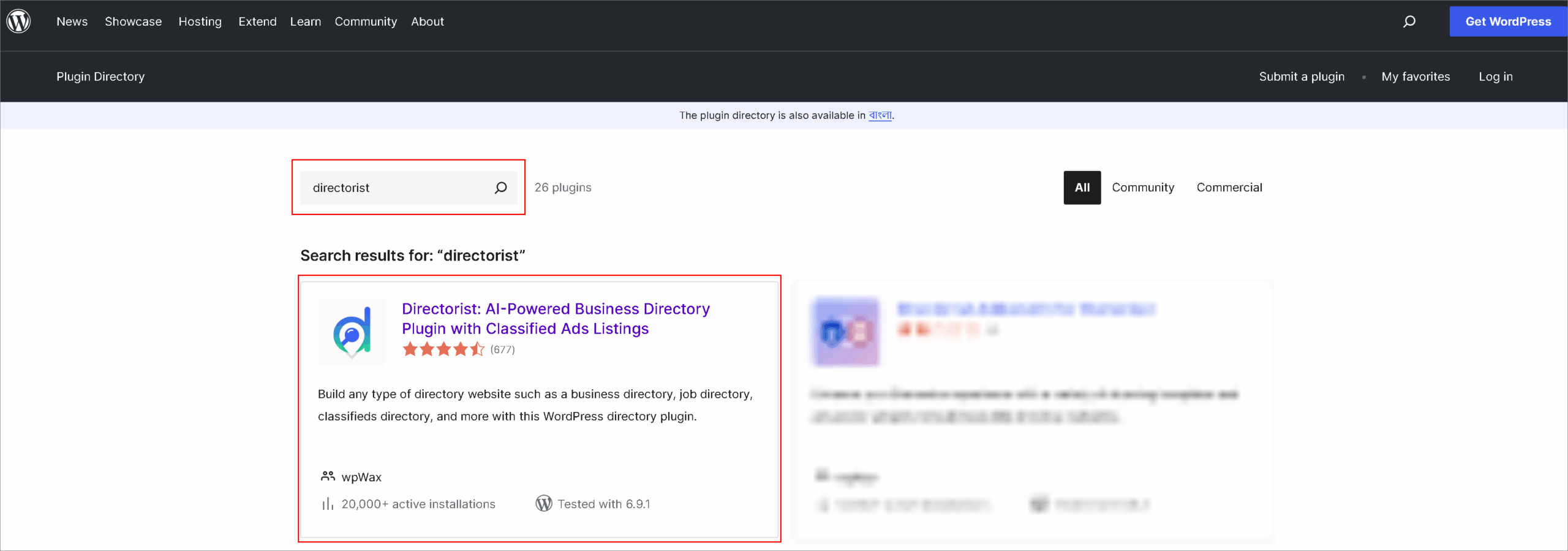
Next, activate and configure the setup wizard for a fresh start. For optimal configuration, we recommend visiting the Directorist official documentation to tailor the settings to your needs.
Step 2: Install a Directory Theme
Directorist is compatible with all WordPress themes, allowing you to select any theme you prefer. However, opting for a directory-specific theme can enhance your website’s overall look and feel.
To do this, we are using the One Listing Pro theme
Once you get the theme, navigate to the WP Admin Dashboard > Appearance > Themes > Add New.
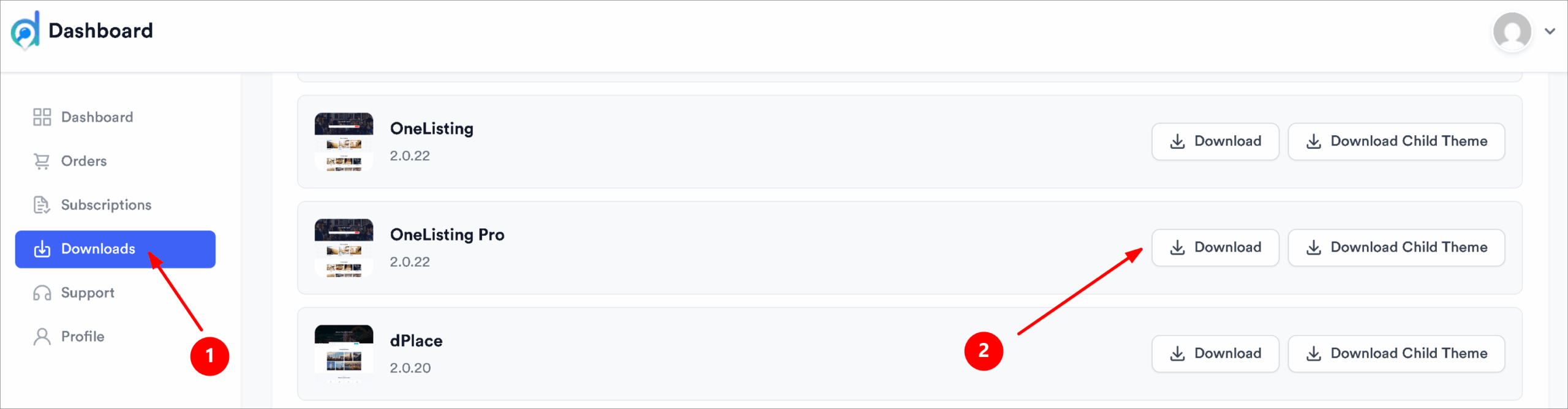
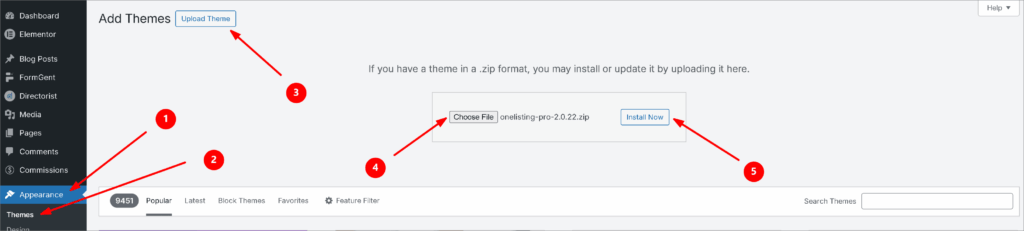
Then click on Upload Theme > Choose File and select the zip file > Install Now.
Now, activate the theme to take an effect
Upon installing the theme, you will see some plugins and tools suggested to install. So, make sure you have installed all the suggested ones so that the theme works perfectly fine.

And that’s it!
Step 3: Create Categories & Tags for Event Directory Website
An event directory website must be user-friendly in a way that visitors can find their listing item in the flash of an eye. Upon creating relevant categories like Holidays, Business, Education or Health & Wellness, your event directory website can suggest related listings according to the visitors’ choice.
To this end, you need to create a set of relevant categories and tags. In the Directorist menu, you will find both of these items where (category) you can also add images, assign the category to a parent one, give a description, add icons & colors.
To do so, you just need to go to the Directorist > Categories > Fill out the fields > Hit the “Add New Category” button.
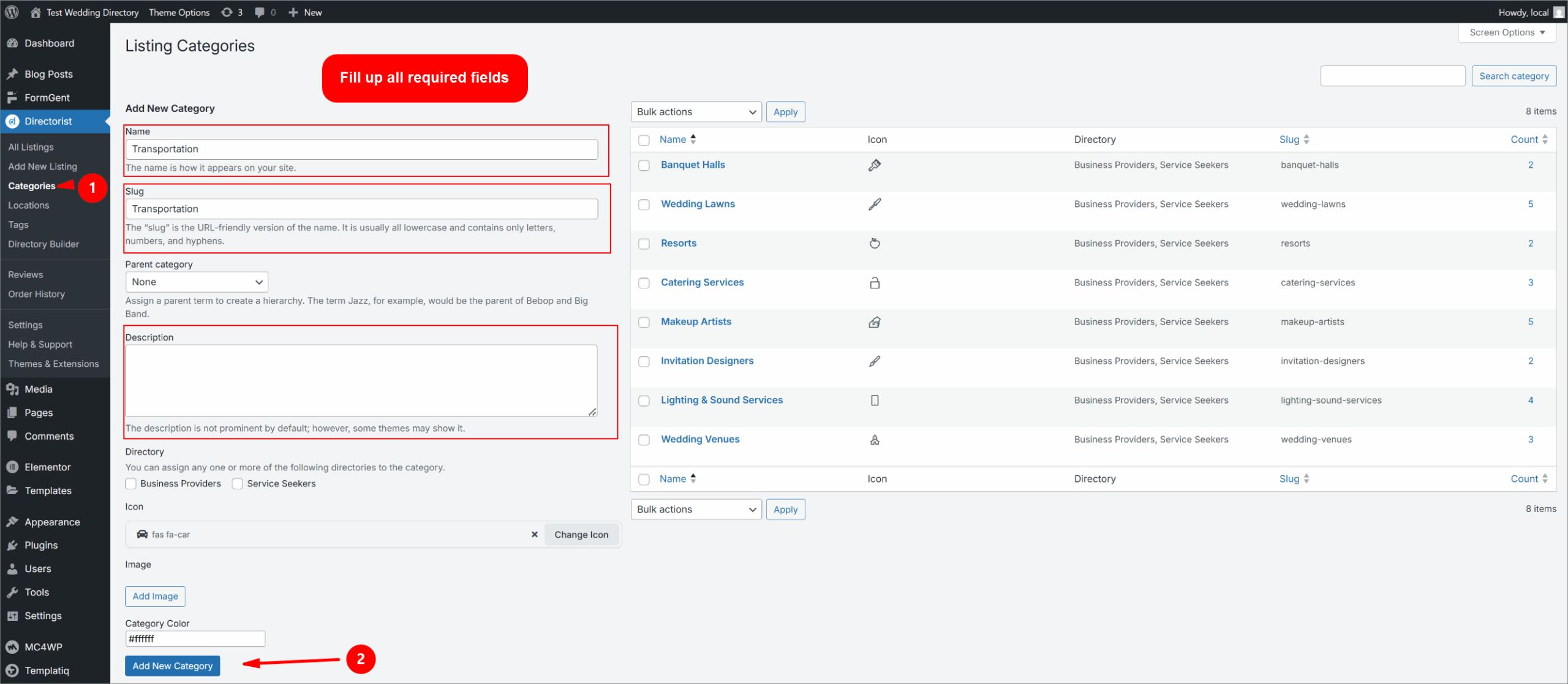
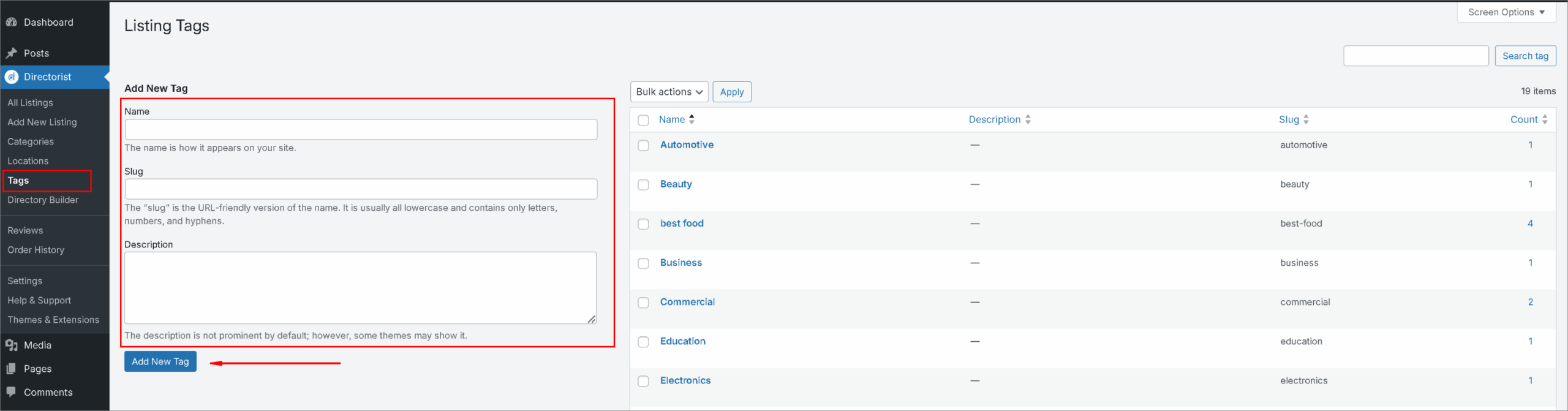
Similarly, you can add tags so that Directorist can show the relevant listing item to the visitors. You can do it from Directorist > Tags > Enter Credentials > Add New Tag.
Step 4: How to Add New Locations on Your Event Directory Website
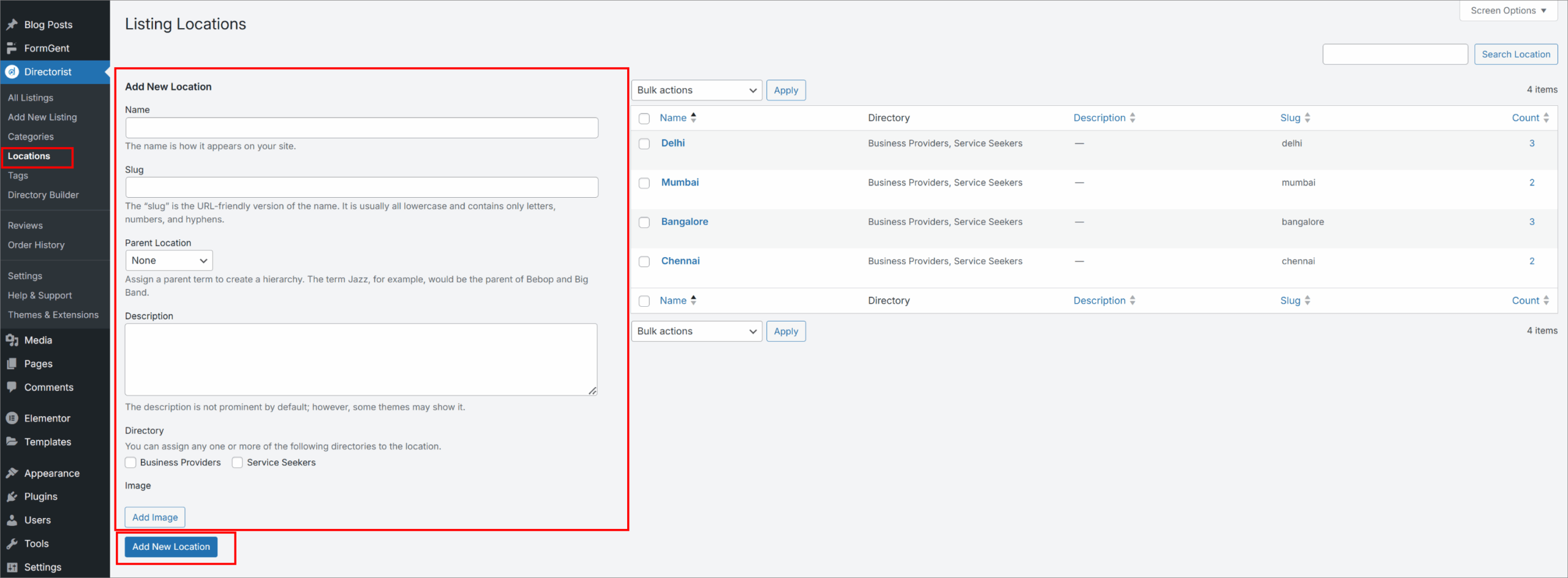
Just like adding categories or tags adding locations helps the users find the desired event listing from event organizers or event service providers. To add locations, you have to go to the Directorist > Locations > Enter credentials (name, description, directory type, etc.) > Hit the Add New Location button.
Step 5: Include Front-End Submission Form
You have to add a Submission Form in your event directory website so that event organizers or event service providers can add or submit their business.
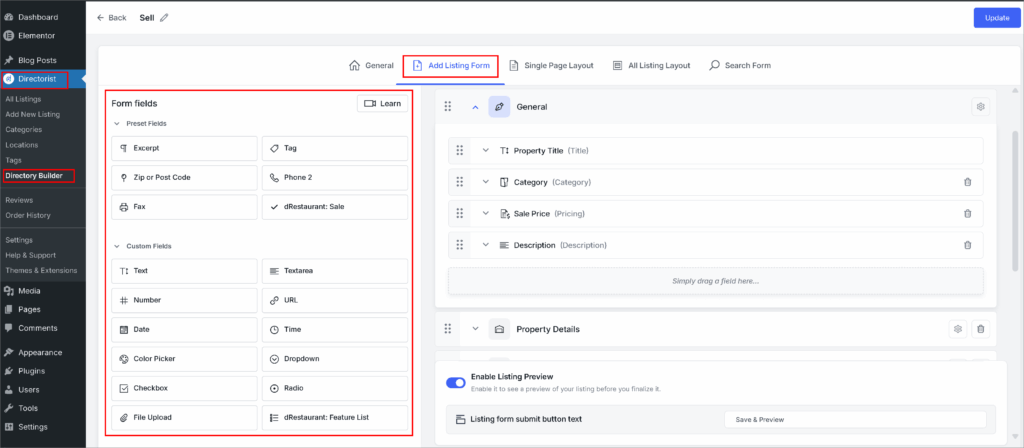
To add a submission form to your event directory website, navigate to the WP Admin Dashboard > Directorist > Directory Builder > Add Listing Form
Use Preset or Custom fields to customize your submission form.
However, the event organizers or event service providers will add or submit the majority of the listings. One thing you can do is to check from “All Listings” whether the listings violate your community standard or not. And, you can charge money for every listing.
To add listings, event organizers or event service providers need to have a registration with your site. After the registration is done, they can freely add more listings from the “Add listings” option through the submission form or you can turn on guest listing option that doesn’t require any registration. You can check the progress whether the submission is okay or not.
You can also add listing manually by following: Directorist > Add New Listing > Enter Credentials > Publish

Step 5: Set Up Search and Filters
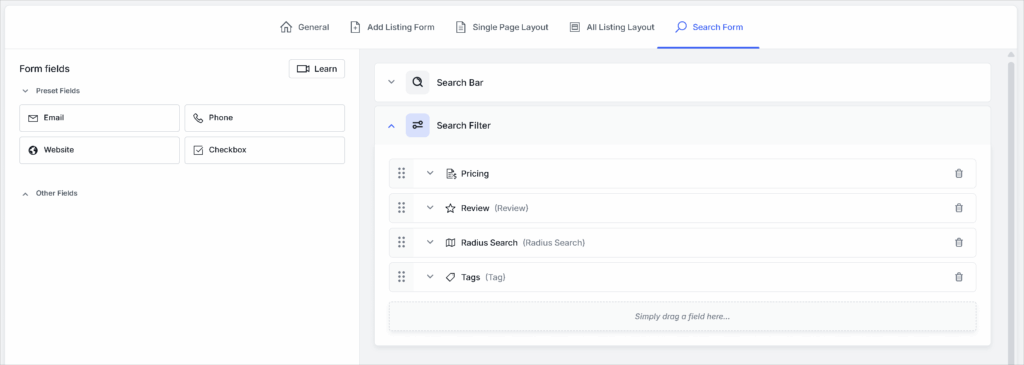
For providing a great experience to the visitors, fast and advance search and filter system must for directory website. Directorist offers advanced filter & search form builder that lets users search listings based on large number criteria like custom fields, tags, price range, and so on. If you’ve multi directory, Directorist Universal Search is a great tool that pull listings and categories from every active directory.
To setup search and filter: Directorist > Directory Builder > Search Form > Use “Form Fields”
Step – 6: Turn on Monetization Feature
Earning revenue from a directory website should be a primary objective for any directory website owner. Using Directorist, you can monetize your event directory website through various methods.
- Charge for listings (Free)
- Featured listings (Free)
- Allow businesses to claim listings (Premium)
- Charge for viewing private listings (Premium)
- Allow private/sponsored advertising (premium)
- Charge for membership (Premium)
- Sell business leads (Premium)
- Promote affiliate products (Premium)
- Allow sponsored articles/guest posting (Premium)
- Bookings & appointment (Premium)
- Paid ad placement (Premium)
Directorist supports both online and offline method to receive payments. To add your bank account details, navigate to the WP Admin Dashboard > Directory Listings > Settings > Monetization

With Directorist, you can enjoy both online and offline payment method for FREE! You can setup offline bank transfer method to receive payments by navigating to the WP Admin Dashboard > Directory Listings > Settings > Monetization > Offline Gateways Settings > Insert your details > Save changes.
You should remember that this payment gateway needs some manual action to complete an order. After getting a notification of an order using this offline payment gateway, you should check your bank if the money is deposited into your account. Then you should change the order status manually from the “Order History” submenu.
For online payment method you can use PayPal for Free! For this, you have setup the gateway system through a extensions called PayPal Payment Gateway
You can also offer more freedom to your users to choose their preferred payment method by using premium extensions Directorist Authorize Payment Gateway and Stripe Payment Gateway.
Step-7: Set Up Your Homepage
Your homepage is the place where it create the first impression about your directory business on visitors mind. With the directorist niche based theme, your directory website’s structure already organized. You have to update the homepage with images, color, logo, fonts that aligns with your brand. You can edit existing homepage or add a new page.
To add a new homepage: WP Dashboard > Pages > Add New Page.

Directorist supports both Gutenberg and Elementor. With Directorist’s customized blocks and shortcodes, you can easily organize your homepage.
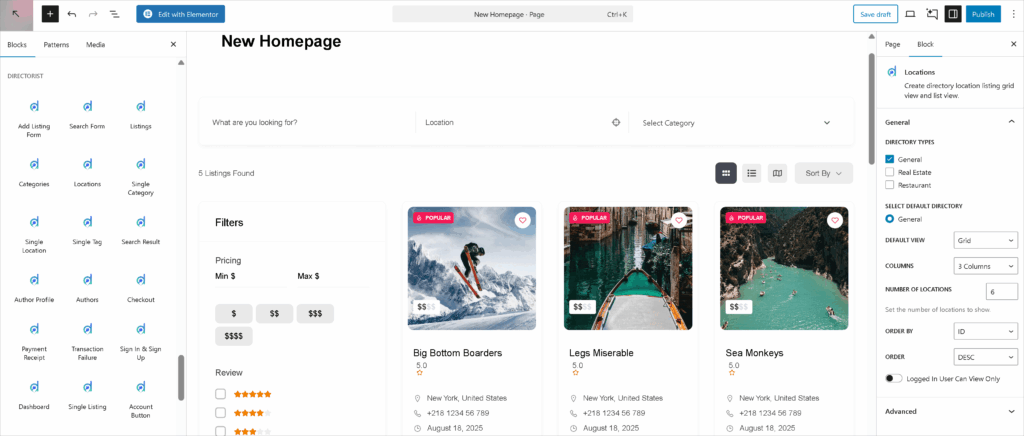
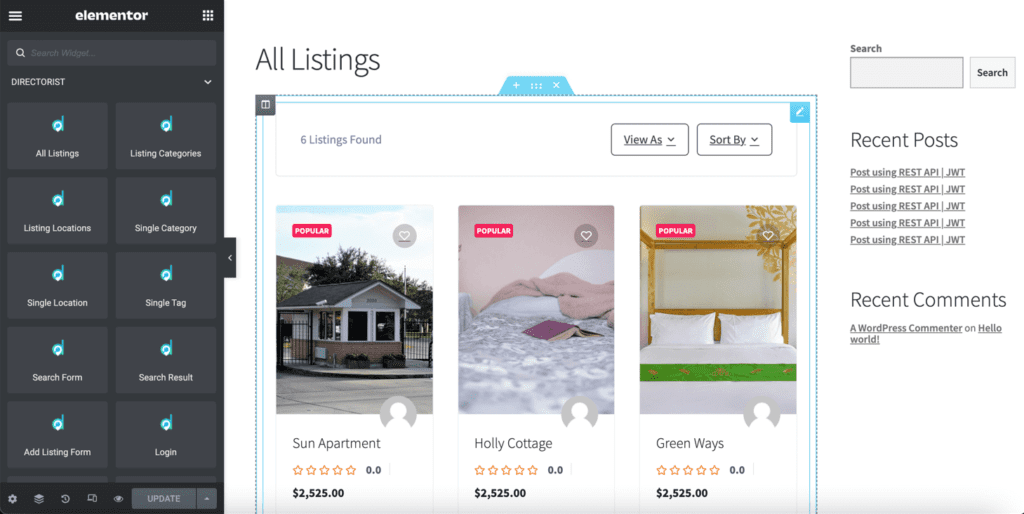
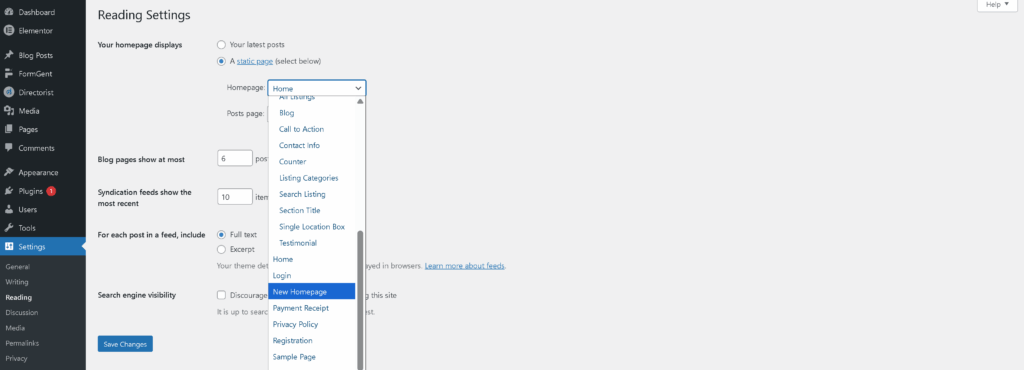
After finishing the edit, publish it. Don’t forget to set the new page as default homepage from Settings > Reading > A Static Page > Select Your Page
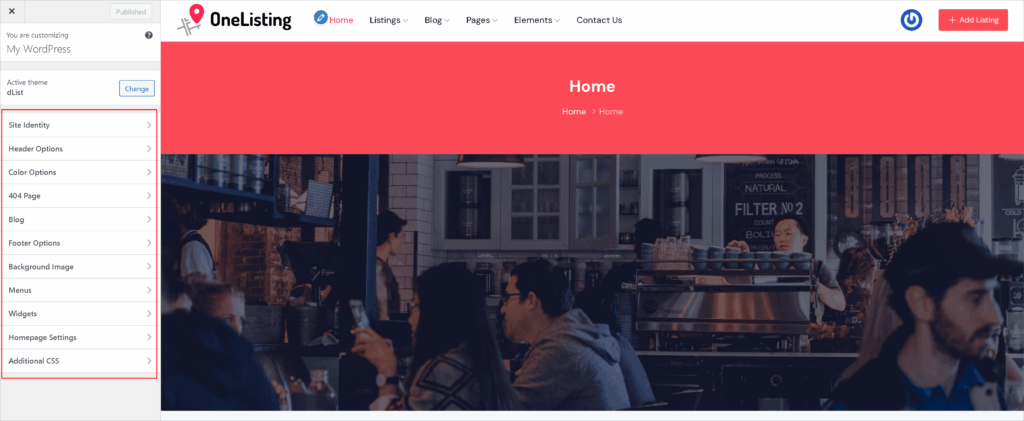
Pro Tip: For more customization like color, logo, favicon navigate to WP Dashboard > Appearance.
Step-8: Publish You Directory Website
At this stage, you’ve completed the setup process. Make sure to check major options like filter, form submission, review system. We suggest to cross check with this guide to avoid common mistakes that most directory owners do.
After all the cross check done, Publish your directory website.
Extending Functionalities of a WordPress Directory Website for Events
Earlier, we finished building the basic event directory website for WordPress. Now, if you want to extend the functionalities of your directory website, then you can move easily with Directorist’s advanced features and extensions.
For example, you want to allow the listing owners to set different event fees for their listings so that their users can have different options to choose from. To set this feature, you can add this feature to your event directory website using the Pricing Plans extension.
Again, you can allow directory website users to compare listings just by adding Compare Listings to your existing event directory website.
To add the extension, go to the WP-Admin Dashboard ➝ Plugins ➝ Add New ➝ Upload Plugin ➝ and upload the Extension ZIP file and Activate it.

Final Thoughts
We believe that this tutorial helped to create an event directory website successfully. To add more functionality and get more potentiality, explore these recommended sources.
- 10 Checklist Before Building A WordPress Business Directory Website
- 10 Real Directory Website Examples Built With Directorist (And How You Can Build Yours Too)
- 10+ Incredible Features You Might Have Missed in Directorist
If you liked our posts, don’t forget to subscribe to our blog so that we can notify you once any post is published. Directorist is now on Facebook, Twitter, and LinkedIn! You can also join the Directorist Community for sharing your thoughts and experiences relating to the directory niche. Come and join us to see what we’re up to.


Md. Hamim Khan
Md Hamim Khan is the Content and SEO Manager at Directorist, where he creates engaging content that helps improve online visibility. When he’s not at work, he loves playing cricket and enjoys chatting with friends, family, and colleagues.


Leave a Reply
You must be logged in to post a comment.