

Table of Contents
- 1 5 Real Estate Directory Examples That Build With Directorist
- 2 Core Features Driving Success in Real Estate Directories
- 3 The Successful Real Estate Directories and How They Monetize their Websites
- 4 How to Create Your Own Real Estate Directory Website (Step By Step)
- 4.1 Step 1: Choose an Obvious Niche and Market
- 4.2 Step 2: Define Your Directory Model
- 4.3 Step 3: Plan Your Listing Information
- 4.4 Step 4: Constructing the Website Structure
- 4.5 Step 5: Add Search, Filters and Map Features
- 4.6 Step 6: Set Up Lead Collection
- 4.7 Step 7: Include the Trust & Safety features
- 4.8 Step 8: Integration Monetization Options
- 4.9 Step 9: Launch With a Sufficient Number of Listings
- 4.10 Step 10: Promote and Grow
- 4.11 Step 11: Improve Using Data
- 4.12 Step 12: Scale the Directory
- 5 Turn Inspiration Into Action
- 6 FAQs About Real Estate Directories
- 6.1 What is a real estate directory website and how does it work?
- 6.2 What are the best real estate directory examples available today?
- 6.3 How is a real estate directory different from a real estate marketplace?
- 6.4 What features do successful real estate directory examples have in common?
- 6.5 How do real estate directory websites make money?
- 6.6 Are real estate directory examples suitable for local or niche markets?
- 6.7 What technology platforms are commonly used to build real estate directories?
- 6.8 How important is SEO in real estate directory examples?
- 6.9 Can a real estate directory website generate qualified leads for agents?
- 6.10 What mistakes should be avoided when analyzing real estate directory examples?
5 Real Estate Directory Examples You Should Check for Inspiration
-

- Tips & Tricks Themes
- 11 mins read
If you’re thinking about building a real estate directory website like Zillow, chances are you’re not short on ideas – you’re short on clarity. You know the opportunity is big as the global real estate market is projected to reach $5.87 trillion in 2029 at a compound annual growth rate (CAGR) of 7.1%.
You may have already explored plenty niche-focused portals similar to Zillow, Rent.com or any other local portal that dominate search results, attract steady traffic, and generate leads for realtors. What’s missing is a clear picture of how these sites are actually built and why some succeed while others fade out. That’s where Real Estate Directory Examples matter.
A real estate directory isn’t just a list of properties. It’s a carefully structured platform that connects buyers, renters, and agents through search, location data, and trust signals. When done right, it becomes a powerful business asset. When done wrong, it becomes another unused website with empty listings and no traction.
If you’re looking for inspiration before you build – this is the right place to start. If you have other niches in mind, explore top 10 real business directory websites that are also built with Directorist.
In this guide, we’ll represent 5 Real Estate Directory Examples that clearly demonstrate how real estate directory websites are structured, monetized, and scaled. And interestingly all of them are built with the best WordPress directory plugin, Directorist.
5 Real Estate Directory Examples That Build With Directorist
1. Rice Realty Team
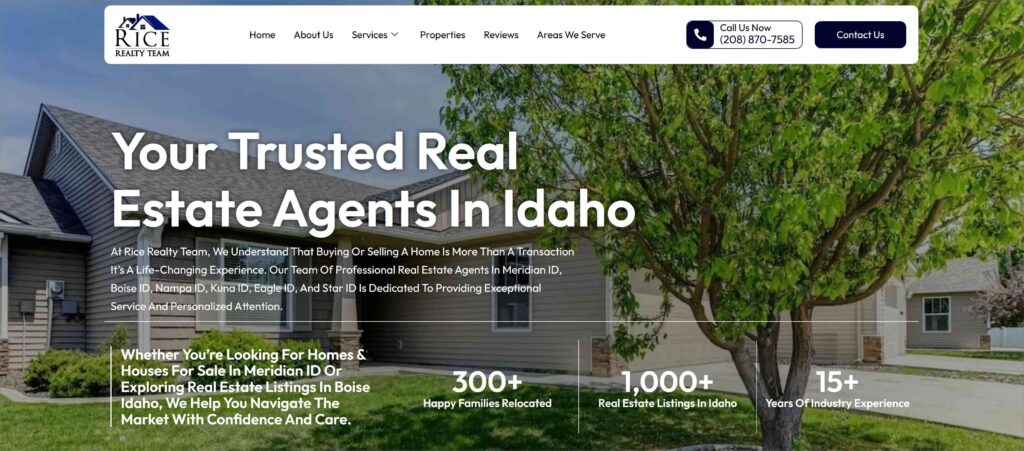
Rice Realty Team is a full-service real estate agency operating in Meridian, Boise, Nampa, Kuna, Eagle, and Star, Idaho. It functions as both a brokerage site and a localized real estate agents directory for buyers and sellers. Their approach is built around local market expertise, personalized guidance, and full relocation services.
Key Services:
- Residential, commercial, and land listings.
- One-on-one support from experienced realtors.
- Relocation assistance and buyer/seller strategy.
- Local market insights for Idaho communities.
Business Focus:
- Top Realtor presence in Meridian and Boise area.
- Helps clients find homes, relocate, and close property deals with confidence.
- Offers comprehensive real estate solutions, including marketing and negotiation support.
2. Brown & Co Marbella
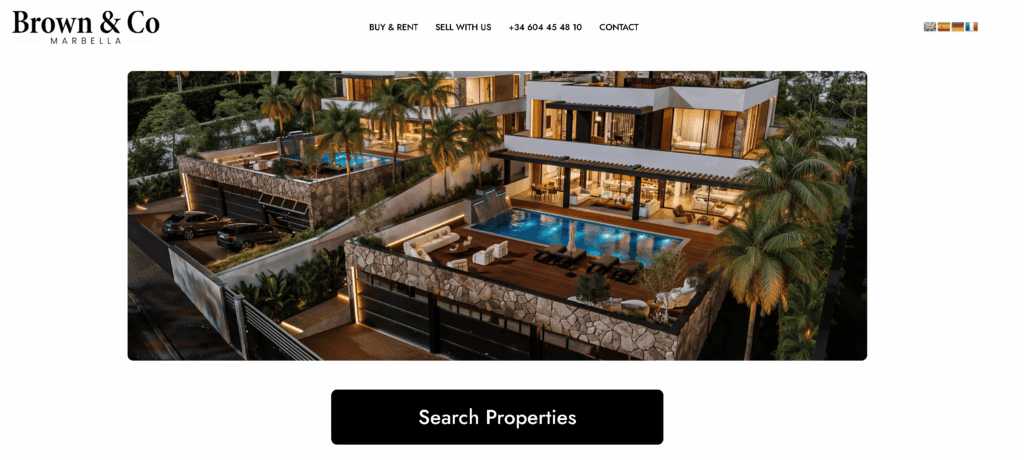
Brown & Co Marbella is a real estate agency based in Estepona and Marbella, Costa del Sol, Spain. They represent one of the strong real estate agent website examples focused on high-end property sales, primarily serving customers interested in luxury homes and prime locations along Spain’s Mediterranean coast. The site showcases exclusive listings such as villas and premium homes, and the business emphasizes bespoke property services tailored to lifestyle and investment priorities.
Key Details:
- Offers luxury properties and residential listings.
- Provides contact support via email and phone.
- Located in Urbanización Matas Verdes, Estepona, Spain.
- Focuses on high-end market segments and personalized real estate service.
3. Aspire Realities
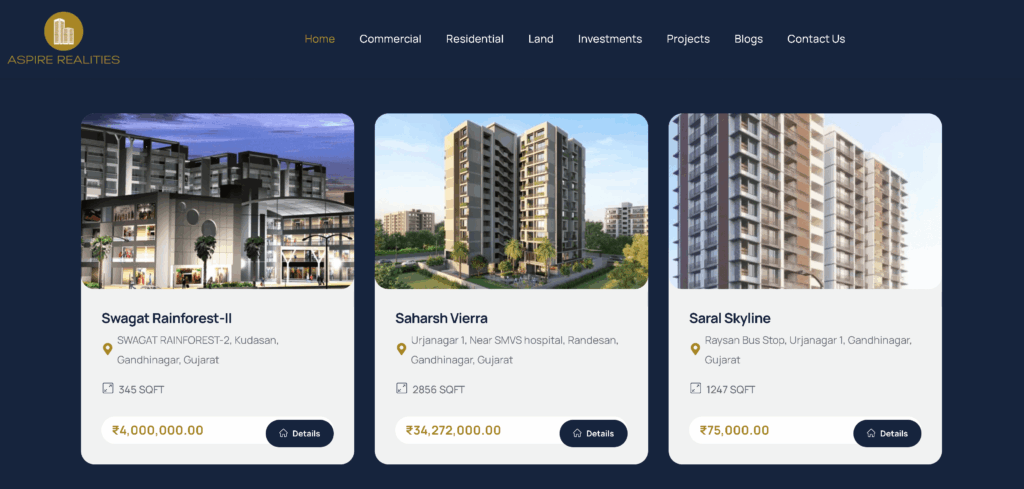
Aspire Realities is a property services firm offering residential, commercial, and investment listings. It blends advisory services with directory-style listings, similar to structured real estate directories seen in emerging markets.
Key Services:
- Residential, commercial, and land listings.
- Investment opportunities and project highlights.
- Personalized property search and client guidance.
- Blog and market-trend content to assist buyers.
Business Strengths:
- Claims thousands of satisfied clients and diverse property categories.
- Focuses on verified and regularly updated property listings.
- Offers expert support including property comparison and site visits.
4. Ram Estate Management

Ram Estate Management appears to be a property consultancy and brokerage focused on the Ahmedabad, India real estate market. They provide services for buying, selling, renting, and investment property assistance, with local expertise in residential and commercial zones. They promote smart property solutions and guidance for clients seeking property in and around Ahmedabad.
Key Services:
- Real estate buying, selling, and rental support.
- Expert advice for dream home and investment decisions.
- Localization in Ahmedabad markets, including Wapa and Jgatpur areas.
Business Focus:
- Trusted property agent with local experience.
- Helps clients navigate property transactions with transparency.
5. First Close Group
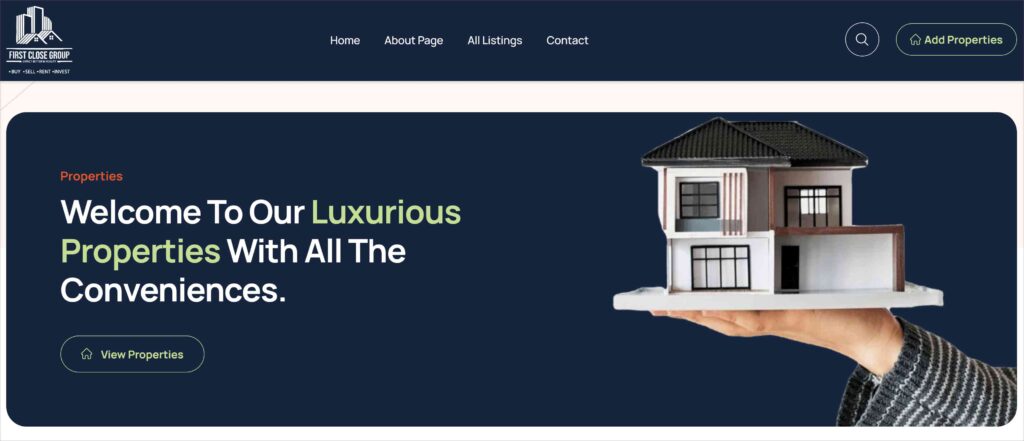
First Close Group is a real estate consultancy and property services firm located in Ahmedabad, India. They specialize in residential, commercial, and investment property management and advisory services for local clients. Their focus is on helping clients make informed decisions in real estate through professional consultancy. It reflects how professional firms can evolve from a free real estate agent directory concept into a trusted advisory platform.
Key Services:
- Real estate consulting and advisory.
- Property management solutions.
- Residential and commercial property support.
Market Positioning:
- Positioned as a trusted property expert in Ahmedabad.
- Offers tailored guidance for buyers and investors.

Core Features Driving Success in Real Estate Directories

There may be differences in optional features depending on the types of directory business. But every directory business has some common or you may call it as core features. These core features are the core players of a successful real estate directory business. They make the website simple and easy to use. It also helps visitors find their choices without confusion and allows agents to connect with serious buyers. Let’s get an brief overview about some core features of real estate directory website:
1. Comprehensive and Dynamic Property Listings Management
Every property listing should include clear and complete information such as price, location, photos, and key features. Listings must be easy to update so prices and availability stay correct. When information is accurate and current, users trust the directory more and return to it.
2. Advanced Search, Filters, and Interactive Maps
Strong search tools help users find the right property quickly. Filters allow people to sort homes by price, area, or type. Interactive maps make it easier to understand locations and nearby places. These features save time and improve the search experience.
3. Better User Experience (UX) and Clean Design
A clean design keeps users focused. Pages should load fast and work well on mobile devices. Simple menus and clear buttons guide users smoothly from searching to contacting an agent. Good directory website design helps turn visitors into leads.
4. Lead Generation and Conversion Tools
Real estate directories must collect leads effectively. Contact forms should be short and easy to fill out. Clear buttons encourage users to reach out. Leads should be sent to the right agent quickly so no opportunity is missed.
5. Building Trust and Credibility
Trust is very important in real estate. Reviews and ratings help users feel confident. Verified listings and agent profiles make the platform feel safe. When people trust a directory, they are more likely to contact agents and take the next step.
The Successful Real Estate Directories and How They Monetize their Websites

Effective real estate directories are not anchored on a single source of income. Rather, they are integrating various monetization strategies to establish long-term and consistent revenue and value to agents and users. The most prevalent methods that the best real estate directories earn their profit include the ones listed below.
1. Membership and Subscription Plans
The majority of successful directories take a subscription fee to agents or agencies monthly or annually. Such plans normally enable users to post listings, maintain profiles and get inquiries. More plans are listed in higher plans, featured, lead access, and performance insights. This model is effective as it brings about predictable and recurrent revenues.
2. Priority Placement and Featured Listing
Visibility is frequently sold through directories. Agents will be charged to place their listing at the top of search results, category or homepage. This is one of the most popular and effective ways of monetization because it directly affects leads.
3. Pay-Per-Lead and Referral fee
Other directories make a profit each time they make a qualified lead to an agent. Some of them will charge a referral fee or commission. This is a very appealing model to the agents as they do not have to pay every time there is real interest or value.
4. Sponsored Content and Advertising
Numerous directories sell advertisement space to related businesses including mortgage providers, home inspectors, movers or insurance companies. Sponsored listings and promoted pages are also considered additional revenue types but do not interfere with core listings.
5. Freemium Upsells
Effective platforms have free basic listing but the upgrade is paid such as more photos, videos, analytics, or branding. This reduces the barrier to entry and promotes paid upgrades in the long run.
With the integration of these strategies, real estate directories develop scalable and adaptable revenue models that also increase with traffic and confidence.
How to Create Your Own Real Estate Directory Website (Step By Step)

Step 1: Choose an Obvious Niche and Market
Choose what your directory will be about. Decide on location (city, country, world wide) and type of real estate (rentals, sales, commercial, luxury and student housing). A good niche helps you grow faster and get the right set of audience.
Step 2: Define Your Directory Model
Decide who will add listings. This can be agents, agencies, property owners or your own team. Also decide if listings will be free, paid or a mixture (freemium). This step lays a foundation for your business plan.
Step 3: Plan Your Listing Information
Make a checklist of what things should be included in each listing. For example: Title, price, address, property type, bedrooms, bathrooms, size, photos, map location and contact info. Try to keep the same so that the user can compare properties literally.
Step 4: Constructing the Website Structure
Create a nice structure in order to navigate. List out the listings by location and type of the property. Come up with the pages, such as: Home, Listings, Locations, Categories, Agents, Submit Property, Pricing, Contact. A good structure is good for users but it is also good for SEO.
Step 5: Add Search, Filters and Map Features
Search is the most important part of a directory. Add filters for price, location, property type, size and other important features. Add an interactive map so that your user can research nearby areas and properties without much hassle.
Step 6: Set Up Lead Collection
Add simple contact forms and understandable buttons such as “Call Now” or “Send Inquiry.” Make sure to go to the right agent or listing owner. If possible, set aside leads by placing them in the dashboard or email notification.
Step 7: Include the Trust & Safety features
Real estate needs trust. Benefits include associations of verified badges, agent profiles, reviews, and listing rules. Display phone numbers and business information on an as-needed basis. This helps prevent an occurrence of fake listings and engender confidence.
Step 8: Integration Monetization Options
Decide how you are going to earn money. Common options include memberships for agents, paid listings, featured placement, ad, and pay per lead. Keep pricing simple. Make the value of each pricing plan very clear.
Step 9: Launch With a Sufficient Number of Listings
Start with a good number of valid listings before marketing. You can add sample listings, invite agents or provide early discounts to get the first users onto board.
Step 10: Promote and Grow
Start SEO and local marketing. Create location pages, blog content and guides to search for and be searchable. Utilize social media, agent and community group partnerships. Track what is working and get better over time.
Step 11: Improve Using Data
Track user behavior. Which filters are used most? Where do people drop off? Improve those areas. Add features step by step and not by guess.
Step 12: Scale the Directory
Once the model works, expand. Add more places, more categories and more agent tools. Improve performance and site speed as the number of listings increase. Scaling works best when your foundation is sound.
You can create a real estate directory website using custom code, a real estate agent website template, or dedicated tools. If you’re searching for something that is fairly simple to deal with but still provides the sophistication of advanced features, you can develop your real estate directory website using Directorist.
👉To create a real estate directory website using Directorist, follow the step by step procedure given in this resource: [How to Create a Real Estate Directory Website with WordPress for Free!]
👉You can also check out Real Estate Directory Listing Website Template
Turn Inspiration Into Action
Building a successful real estate directory is not about copying designs or chasing trends. It’s about understanding what works, why it works, and how to apply those proven patterns to your own market. The Real Estate Directory Examples covered in this blog show one clear truth: directories that win focus on structure, search, trust, and monetization from day one.
If you’re serious about launching a real estate directory that can scale, generate leads, and produce long-term revenue, choosing the right foundation matters. You need flexibility without complexity. Power without heavy development costs. And control without sacrificing growth.
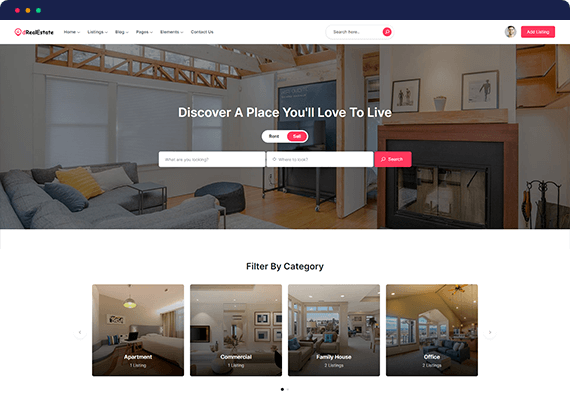
That’s where a real estate directory theme like dRealEstate comes to play.
This Directorist-based theme gives you everything you need to build a professional real estate directory including advanced search and filters, location-based listings, frontend submission, realtor and real estate company profiles, monetization tools, and full ownership of your platform – all without writing custom code.
Whether you’re starting with a local area or planning to scale into a large nation-wide directory, Directorist is built to grow with you. If you’ve been inspired by the examples in this guide, now is the time to act. Start building your real estate directory with the right tools, the right structure, and a clear path to profitability.
FAQs About Real Estate Directories
What is a real estate directory website and how does it work?
A real estate directory website lists properties, agents, or agencies in an organized way, usually by location and category. Users can search, filter, compare listings, and send inquiries, while agents or property owners receive leads through the platform.
What are the best real estate directory examples available today?
The best real estate directory examples offer advanced search, a clear location structure, verified listings, and strong lead generation. They focus on usability, trust, and monetization rather than listing volume alone.
How is a real estate directory different from a real estate marketplace?
A real estate directory organizes and displays listings and professionals, with transactions typically handled offline. A marketplace usually manages the full transaction process directly on the platform.
What features do successful real estate directory examples have in common?
Successful examples include advanced filters, interactive maps, mobile-friendly design, frontend submission option, agent profiles, lead capture forms, and SEO-optimized location pages that improve discovery and conversions.
How do real estate directory websites make money?
They earn revenue through memberships, paid listings, featured placements, advertising, pay-per-lead models, and referral commissions. Most use multiple income streams.
Are real estate directory examples suitable for local or niche markets?
Yes. Local and niche directories often perform very well because they target specific areas or audiences, rank faster in search engines, and attract highly relevant users.
What technology platforms are commonly used to build real estate directories?
Real estate directories are built using WordPress, Webflow and custom stacks. WordPress eases your tasks with tons of real estate directory themes that come with demo data and pre-built sections which you can customize and launch fast.
How important is SEO in real estate directory examples?
SEO is essential because most traffic comes from search engines. Strong SEO helps directories rank for location-based and long-tail keywords, driving consistent organic traffic.
Can a real estate directory website generate qualified leads for agents?
Yes. When search, filters, and inquiry forms are well optimized, a real estate directory can generate highly qualified leads for agents and agencies.
What mistakes should be avoided when analyzing real estate directory examples?
Common mistakes include focusing only on design, ignoring monetization, overlooking SEO structure, copying features without understanding user intent, and launching without enough listings or trust signals.
If this guide helped you, take the next step. Subscribe to our blog to get notified as soon as we publish new, actionable content on building and growing directory websites.
Follow Directorist on Facebook, Twitter, and LinkedIn to stay updated with product releases, tips, and real-world use cases.
For deeper discussions, practical insights, and shared experiences from other directory builders, we welcome you to join the Directorist Community.
Stay connected, stay informed, and build smarter directories with us.

Rezaul Karim
Rezaul Karim is a passionate Digital Marketer driven by curiosity and creativity in the ever-evolving world of online marketing. With over 6 years of hands-on experience in Content Writing, Copywriting, SEO, and Social Media Marketing, he brings a strategic edge to crafting content that engages and converts. Always eager to explore new trends and tools, Rezaul thrives on finding smarter ways to connect brands with their audiences. Outside of work, he enjoys diving into books or recharging in nature.


Leave a Reply
You must be logged in to post a comment.